- The Nimitz Report
- Posts
- Beyond Crisis Lines: Congress Debates the Next Wave of Veteran Suicide Prevention
Beyond Crisis Lines: Congress Debates the Next Wave of Veteran Suicide Prevention
Members weighed proposals to expand community-based mental health care, deploy data-driven outreach tools, and strengthen accountability—while raising sharp concerns about oversight, duplication, and continuity of care across VA and non-VA settings.
⚡NIMITZ NEWS FLASH⚡
Legislative Hearing
House Veterans’ Affairs Subcommittee on Health
January 13, 2026 (recording here)
HEARING INFORMATION
Witnesses & Written Testimony (linked) (Panel One):
Dr. Mark Koeniger: Acting Assistant Under Secretary for Health for Patient Care Services, U.S. Department of Veterans Affairs
Dr. Maria Llorente: Acting Assistant Under Secretary for Health for Integrated Veteran Care, U.S. Department of Veterans Affairs
Witnesses & Written Testimony (linked) (Panel Two):
The Honorable Charles Rudolph Paul: Ambassador Extraordinary & Plenipotentiary, Embassy of the Republic of the Marshall Islands
Mr. James Whaley: Chief Executive Officer, Mission Roll Call
Ms. Elizabeth McCoy: Associate Director of Government Affairs, Wounded Warrior Project
Ms. K. Conwell Smith: Deputy Chief, Military & Veterans Policy, American Psychological Association
Keywords mentioned:
Mental health, suicide prevention, opioid overdose, Community Care, Mission Act, telehealth, rural access, medical records,mTBI/TBI, BEACON Act, neurorehabilitation, PTSD research, CHAMPVA, cultural competency, women veterans
IN THEIR WORDS
“Too many veterans living in rural areas across our nation face the challenge of living in a health care desert… In a health desert, basic care is difficult to maintain, and even the most routine care presents a significant burden for veterans.”
“Veterans want to get treatment early… before it affects their job, before it affects their family.”
OPENING STATEMENTS FROM THE COMMITTEE
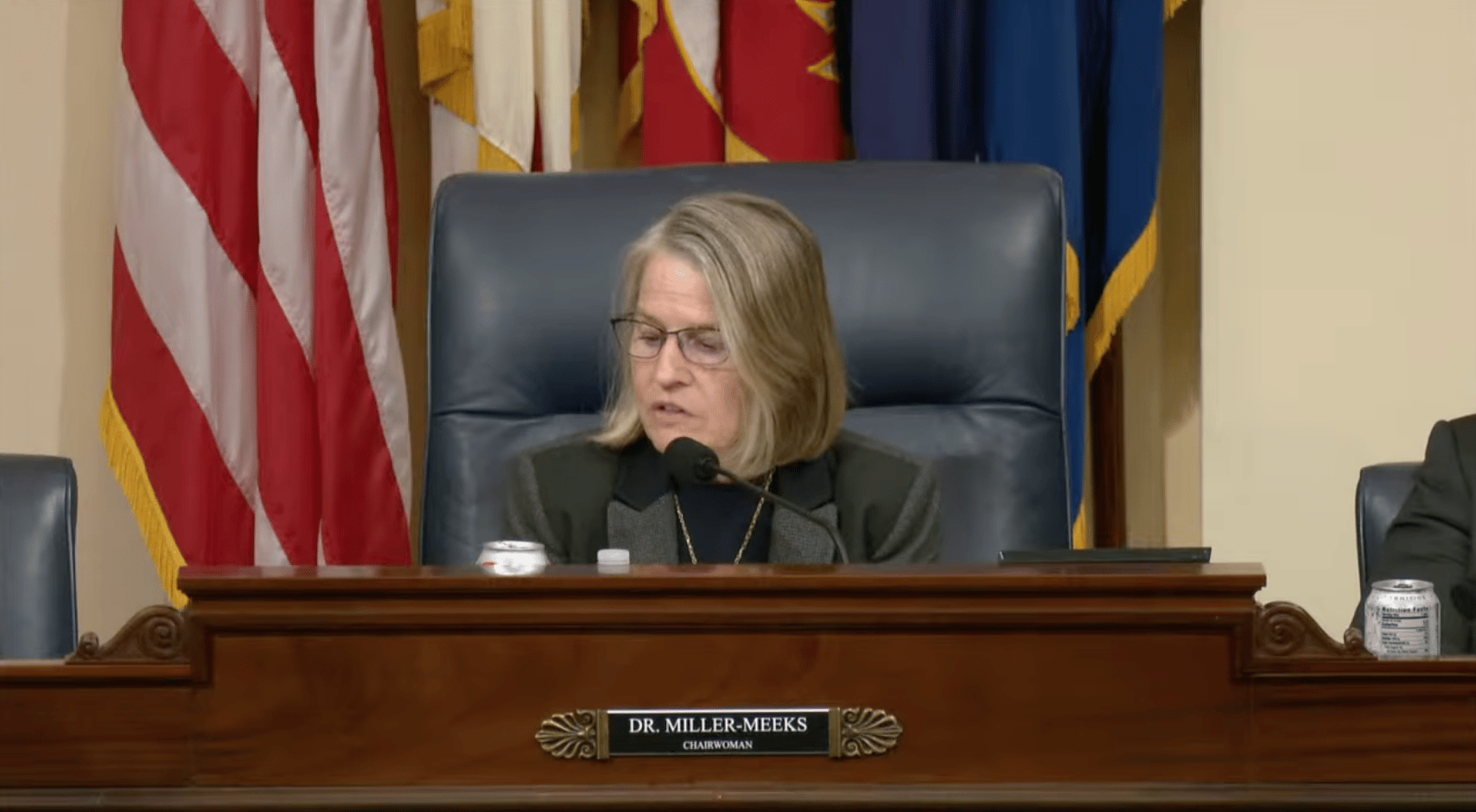
Chair Mariannette Miller-Meeks convened the committee to consider 12 bills aimed at improving veterans’ health care and related systems, with particular emphasis on expanding access to mental health services. She highlighted the Recover Act, the mental health and addiction therapy quality of care legislation, the BEACON Act on chronic mild TBI research, and her own Veterans Health Desert Reform Act to pilot partnerships in underserved areas, emphasizing rural access challenges and the supportive role of telemedicine. She also noted additional legislation to improve provider transparency for CHAMPVA.
Ranking Member Julia Brownley said she was encouraged that multiple Democratic bills would be considered, including proposals addressing opioid overdose risk, ALS research, and reducing co-pay burdens for VA whole health services. She then raised strong objections to several Republican-sponsored bills, arguing they would divert resources from existing VA programs to outside entities while duplicating services and weakening oversight. Brownley warned that grant-based models like those in the Recover Act and BEACON Act risked fracturing continuity of care and lacked sufficient mechanisms to ensure quality, evidence-based standards, and accountability. She emphasized that community care had an appropriate role but argued private providers should meet existing VA community care requirements rather than receive new carve-outs that could allow “double-dipping” in funding.
Rep. King-Hinds said she was proud to present H.R. 6652 to ensure Congress’s commitment under the COFA Act was fully implemented. She emphasized that citizens of the Freely Associated States served in the U.S. military at high per-capita rates but faced major barriers to receiving benefits and medical care when they returned to Pacific island homes. She argued implementation had stalled despite Congress’s clear intent, and she said her bill required the VA to deliver essential services as promised, including telehealth, mail-order pharmacy access, and more accessible beneficiary travel. She concluded that veterans had upheld their end of the bargain and the VA needed to fully and finally fulfill the agreement.
Rep. Landsman introduced H.R. 4590, the No Pain for Veterans Act, as a response to the opioid epidemic’s impact on veterans. He argued that there were FDA-approved non-opioid pain treatments that worked but were not being provided by the VA, even though veterans were asking for alternatives that would not lead to addiction. He said the VA had indicated Congress needed to act before it could expand access to these treatments, and he urged passage of the bill and noted there was a Senate companion measure. He said the bill would align veterans’ options with what many Medicare and privately insured patients already received.
Rep. Fallon presented H.R. 2426, the Veterans Mental Health and Addiction Therapy Quality Care Act, and framed it as necessary to ensure veterans received the best possible care and to identify gaps and best practices. He cited that roughly 18 veterans died by suicide daily and said quality and outcomes, not just access, were central because lives depended on it. He argued that while bipartisan efforts had expanded access through community care, Congress still lacked an independent, objective comparison of VA-provided versus non-VA mental health and addiction care across modalities like telehealth and residential treatment. He said the bill required a public report to drive accountability, replicate what worked, fix what did not, and ultimately reduce unacceptably high suicide rates.
Rep. DeLuzio introduced H.R. 6848, the Whole Health for Veterans Act, to expand access to the VA’s Whole Health Program. He described whole health as a comprehensive, personalized approach that helped veterans proactively manage health through individualized plans, including support like strength and mobility training, and said it improved outcomes and could reduce costs. He cited veterans’ experiences in Pittsburgh and said participants credited the program with avoiding surgeries or other invasive interventions. He explained the bill responded to the introduction of co-pays in October that he said threatened participation, and it would codify no co-pays for priority groups one through five while capping monthly co-pays for others at $30.
Rep. McKenzie emphasized that veteran suicide remained an urgent crisis with persistently high rates and frequent missed warning signs. He noted that more than half of veterans who died by suicide had not used VA health care in the years before death, which he argued showed episodic self-reported screening was insufficient. He introduced the Data-Driven Suicide Prevention and Outreach Act of 2025, which would establish a time-limited competitive grant program to develop predictive models using benefits, service, and clinical data to identify risk before crisis points. He stressed the bill included guardrails—requiring expertise, explainable and clinically actionable models, cybersecurity compliance, and sharing findings with the VA—and he said it would build on programs like REACH VET while avoiding “black box” algorithms.
Rep. Bergman described the BEACON Act and said the bill directed the VA to award grants for studies and randomized controlled trials on neurorehabilitation treatments for chronic mild traumatic brain injury, including designing interventions and measuring effectiveness of funded treatments. He stated nonprofits, academic institutions, and health care providers with neurorehabilitative expertise would be eligible, and he emphasized randomized controlled trials as the gold standard for effectiveness research. He argued the bill addressed the high prevalence of mild TBI and concussions and said it was not about privatizing the VA, but rather enabling outside scientific entities to develop breakthrough therapies benefiting veterans and others with mild TBI.
SUMMARY OF KEY POINTS (PANEL ONE)
Dr. Koeniger said the VA remained committed to coordinated, patient-centered care and that his military medical experience and current role overseeing major VA clinical program offices guided that work. He acknowledged the VA’s delayed testimony and said the department was improving internal processes to prevent recurrences. He cautioned that several bills relied on new grant programs that the VA did not view as the best mechanism in all cases and said VA wanted to work with Congress on alternative structures. He said the VA generally supported expanding mental health access and other initiatives with amendments, while raising concerns about duplication, formulary impacts, and limited new authority in certain proposals.
Ranking Member Brownley asked why the VA needed to adhere to the Mission Act’s community care eligibility and authorization framework, given the Recovery Act’s potential “triple dipping.” Dr. Llorente said the Community Care Program imposed credentialing, privileging, and quality requirements, and she said the Recovery Act did not clearly apply comparable standards to grant-funded care.
Ranking Member Brownley asked whether the Recovery Act grant program was duplicative of existing VA suicide prevention authorities, including the Staff Sergeant Parker Gordon Fox grant program and the COMPACT Act. Dr. Llorente said the VA questioned whether a new grant program was the best mechanism, but said the VA was open to working with the committee on a cost-effective approach to expand access where gaps remained.
Ranking Member Brownley asked whether any statutory or practical barrier prevented the VA from researching and implementing novel or alternative TBI treatments through existing VA research and academic affiliate channels. Dr. Koeniger said he did not have that information on hand and would follow up.
Rep. Abe Hamadeh asked how the VA ensured community care medical records followed the veteran. Dr. Llorente said records flowed both ways but currently arrived through multiple channels that created delays, and she said the VA had issued an RFP for a centralized portal to streamline receipt and integration into the VA electronic health record.
Rep. Hamadeh asked whether the centralized portal had been tried before and when it would be selected and implemented. Dr. Llorente said she was not aware of prior attempts, said awards were expected around March after a 90-day review following the solicitation’s close, and estimated implementation would take about a year. She said faster receipt and upload of records was the goal, but the mechanics were still being built.
Rep. Hamadeh asked how the VA identified “health care deserts” and whether it acted proactively. Dr. Koeniger said the Office of Rural Health identified high-travel-burden areas and conducted proactive outreach to affected veterans.
Rep. Herb Conaway asked how veterans accessed naloxone to prevent opioid-related deaths. Dr. Koeniger said high-risk veterans could obtain naloxone at VA pharmacies under standing orders at no cost, and he said the VA also distributed it through outreach like health fairs.
Rep. Conaway asked how the VA formulary handled requested drugs and how long it took to obtain non-formulary medications. Dr. Koeniger said veterans could access FDA-approved drugs through their providers, and the VA generally filled non-formulary requests within about 96 hours.
Rep. Conaway asked whether the VA should align access with DoD/TRICARE formularies. Dr. Koeniger said he was not familiar with the specific DoD formulary differences and would follow up.
Rep. Kimberlyn King-Hinds asked what legal or logistical issues drove the VA’s phased COFA implementation approach. Dr. Llorente cited medication shipping and refrigeration constraints, the need to understand FAS-side restrictions, and telehealth licensure issues for VA providers.
Rep. King-Hinds asked whether those barriers required regulatory changes or reflected legal prohibitions affecting COFA commitments. Dr. Llorente said she would need to respond for the record.
Rep. King-Hinds asked what the VA had done to estimate costs. Dr. Llorente said VA was assessing likely service, medication, and travel costs, but said utilization uncertainty limited precise projections.
Rep. Sheila Cherfilus-McCormick asked what safeguards the VA used to ensure veterans received comparable, veteran-informed care when referred outside the VA, emphasizing cultural competency. Dr. Llorente said VA trained providers on “veteran culture,” cited toxic exposure training under the PACT Act, and said VA offered cultural competency training to community providers through an external training platform, while also highlighting specialized women’s health programs for women veterans.
Rep. Cherfilus-McCormick asked whether the VA required mandatory standardized cultural competency training for community providers. Dr. Llorente said the VA did not currently impose mandatory requirements, noted the issue had been discussed, and cautioned that extensive mandates could reduce provider availability in underserved areas. She said she would respond for the record on whether training requirements had previously reduced access.
Rep. Jack Bergman asked about the consequences of underdiagnosis or misdiagnosis of chronic mild TBI. Dr. Koeniger said misdiagnosis of any condition harmed veterans and said VA providers worked to avoid diagnostic error.
Rep. Bergman asked how the Recover Act could improve access when veterans first sought help, particularly in rural and remote areas and for veterans not connected to VA care. Dr. Llorente said the VA was open to expanding access and said the bill as written encouraged veterans to enroll in VA care alongside community services, but she added the VA had significant concerns and wanted to work with the committee on revisions.
Chair Miller-Meeks asked how her Health Desert pilot could reshape access if successful. Dr. Koeniger said the VA supported reaching rural veterans and pointed to the Office of Rural Health’s work identifying access gaps and expanding options like telehealth and ride-sharing.
Chair Miller-Meeks asked whether veterans were required to use community care. Dr. Llorente said community care required eligibility, but participation was voluntary and based on veteran preference.
Chair Miller-Meeks asked why the VA should explore care models using non-VA systems in health deserts. Dr. Koeniger said the VA needed to consider both VA and non-VA options to ensure veterans could access the best available care.
SUMMARY OF KEY POINTS (PANEL TWO)
Hon. Rudolph Paul said the Republic of the Marshall Islands and other Freely Associated States had a uniquely close strategic relationship with the United States under the Compact of Free Association, including “strategic denial” rights and hosting a critical U.S. missile testing and space operations range. He said Marshallese citizens served in the U.S. military at among the highest per-capita rates, but many veterans effectively could not return home because VA health care had not been implemented in the FAS despite clear statutory authority and compact obligations. He urged Congress to act to close the gap, arguing the issue was both personal and national security-related and that providing care in the FAS was not an expansion of benefits but fulfillment of an existing promise.
Mr. Whaley said Mission Roll Call used veteran polling and engagement to bring unfiltered veteran perspectives to policymakers and supported the slate of bills as addressing core veteran priorities like TBI, suicide prevention, rural access, mental health, and opioid addiction. He cited survey results showing veterans strongly supported combining clinical treatment with community-based organizations for suicide prevention, with emphasis on training, coordination, and accountability, and he argued the Recovery Act aligned with those priorities through capacity-building and outcome reporting. He said veterans wanted specialized TBI care, often outside VA facilities, and he argued the BEACON Act would create an evidence-based framework to test and publish results on innovative therapies and expand access where warranted. He also supported expanding non-opioid pain therapies, improving independent quality comparisons across VA and non-VA mental health/addiction care, and closing geographic access gaps through telehealth, community providers, and mail-order pharmacy.
Ms. McCoy said Wounded Warrior Project supported many bills on the agenda and emphasized that brain health and mental health were tightly linked for post-9/11 wounded veterans, with TBI increasing risks for chronic pain, depression, anxiety, and suicide. She urged a strategic framework built on prevention, treatment, and innovation, emphasizing early identification of blast exposure and repetitive head impacts and better lifecycle data continuity from DoD to VA. She supported legislation to strengthen blast overpressure research and standardized screening, and she backed the BEACON Act as a way to seed innovation and evaluate therapies across nonprofits, academia, and community partners without diverting existing resources. She also supported the data-driven suicide prevention proposal with the caveat that technology should augment—not replace—proven clinical strategies, and she supported piloting health-desert access solutions while keeping the VA as the coordinator and ensuring outcomes and data flowed back to the VA.
Ms. Conwell Smith said the American Psychological Association supported improving access but warned that several bills created parallel systems outside VA direct care and community care that could fragment treatment, weaken coordination, and reduce quality without stronger safeguards. She focused particular concern on the Recovery Act and the draft Health Desert Reform Act, arguing that veterans should receive consistent standards regardless of care setting. She urged mandatory training for all community providers, stronger evidence-based practice requirements, facility accreditation and quality assurance standards, and robust outcomes measurement so Congress and the VA could evaluate results. She also recommended requiring timely medical record exchange with the VA to prevent continuity-of-care breakdowns and supported provider transparency tools like a public CHAMPVA directory, while noting the mental health quality bill needed stronger provisions to enable meaningful comparisons.
Ranking Member Brownley asked how funding the BEACON Act by diverting money from existing VA mental health programs and the VA National Center for PTSD could affect VA clinical care and research. Ms. Conwell Smith said the PTSD Center was a national leader and warned that defunding the VA and weakening the VA’s scientific rigor could slow or reverse clinical advancements in PTSD and TBI, even if the intent was to involve outside entities.
Ranking Member Brownley asked whether the Recover Act would expand services or improve quality from a clinical perspective and raised concerns about weak oversight. Ms. Conwell Smith said the bill did not clearly require grantees to treat more veterans and allowed grantees to bill the VA and other insurers while also receiving grants. She said the bill lacked VA-like safeguards such as accreditation, peer review, and evidence-based treatment requirements, and said it only appeared to require cultural competency training for a single provider rather than all clinicians.
Ranking Member Brownley asked whether the Recover Act required care coordination with VA, including transmitting medical records and ensuring follow-up. Ms. Conwell Smith said the bill did not appear to require record transmission or participation in the Community Care program, and she cited persistent documentation gaps even under existing community care arrangements.
Ranking Member Brownley asked how Congress could know whether Recover Act grantees used evidence-based practices and what outcomes would be reported compared to VA care. Ms. Conwell Smith said the bill’s references to outcomes were too vague without clear requirements and enforcement and said lack of structure would limit accountability and meaningful evaluation of positive or negative impacts on veterans.
Rep. King-Hinds asked what the most significant challenges were for veterans living in the Freely Associated States and how many were returning home. Hon. Rudolph Paul said many veterans did not identify themselves as veterans when seeking care because there was no benefit to doing so and said the local health system lacked capacity for service-related needs like PTSD and other complex conditions.
Rep. King-Hinds asked for a response to VA claims that shipping medications and negotiating agreements were major barriers and asked what health infrastructure existed in the Marshall Islands. Hon. Rudolph Paul said the Marshall Islands had dispensaries and hospitals built with compact funds and U.S.-trained and licensed doctors and said there had been sustained engagement with the VA beginning around September 2024 that brought both sides close to an agreement by early 2025. He said the Marshall Islands believed the logistical issues raised could be resolved through continued negotiations.
Rep. Maxine Dexter asked whether the Health Desert Reform Act’s oversight provisions were sufficient to ensure participating hospitals delivered care comparable to VA facilities. Ms. Conwell Smith said the bill, as written, did not provide enough structure to give confidence in equivalent or superior quality.
Rep. Dexter asked what risks arose from broad pilot eligibility that did not restrict for-profit or private-equity-backed hospitals and did not require demonstrated drive-time or wait-time need. Ms. Conwell Smith said APA was concerned that unchecked expansion without accountability could undermine the VA’s integrated system and suggested existing Community Care oversight structures could inform stronger guardrails.
Rep. Dexter asked whether the bill’s lack of funding caps could siphon resources from VA facilities and staffing in a zero-sum budget environment. Ms. Conwell Smith agreed and pointed to the decline in VA psychologists and rising mental health demand, arguing that reinvesting in VA staffing was critical to sustaining care quality and training capacity.
Rep. Bergman asked why additional targeted funding was needed for chronic mild TBI, given limited VA capacity, and asked which community partners were best positioned to expand care and innovation. Mr. Whaley said veterans wanted earlier access to treatment to prevent spiraling functional and family impacts and argued that community partners could extend capacity beyond the VA’s footprint. He cited Avalon Action Alliance as an example of a nonprofit network already delivering TBI-related services and said support should include guardrails and accountability.
Rep. Bergman asked how stronger evidence from research could improve day-to-day care for veterans with TBI. Ms. McCoy said innovation could come from multiple sectors and said better coordination and streamlined efforts could reduce duplication and improve outcomes, including by reducing suicide risk for veterans living with long-term brain injury effects.
Rep. Kelly Morrison asked for an explanation of why a consistent, system-wide approach to naloxone access mattered for veterans. Ms. Conwell Smith said veterans faced disproportionate substance use and overdose risks and said reducing barriers to naloxone access helped prevent avoidable deaths.
Rep. Morrison asked how investing in VA providers protected care quality and supported workforce development. Ms. Conwell Smith said VA clinicians delivered care while training the next generation, but warned that burnout and packed clinical schedules were reducing time for supervision and training, putting some VA training programs at risk.
Rep. Jen Kiggans focused on access to CHAMPVA care and her Clarity on Care Options Act. She asked about enrollment barriers, populations facing disproportionate challenges, claim delays, and enrollment backlogs. Ms. McCoy stated that survivors and dependents faced the greatest difficulties and supported creating a public provider directory. She was unable to specify the causes of claim denials and suggested that future VA restructuring might reduce enrollment delays.
Rep. Kiggans also questioned Ms. Smith about provider-side challenges, highlighting navigation difficulties and workforce shortages.
Chairwoman Miller-Meeks questioned witnesses on blast exposure, mild TBI, rural access to care, and suicide outcomes. She asked whether screening or algorithm-based testing could identify blast-related neurological injuries before discharge. Mr. Whaley and Ms. McCoy agreed that cumulative blast exposure was poorly understood and required better data sharing and research.
Chairwoman Miller-Meeks also asked how health desert pilots could reduce travel burdens, with Ms. McCoy citing fragmented community care coverage. The Chairwoman challenged whether current suicide rates reflected acceptable outcomes and emphasized the need for new approaches.
SPECIAL TOPICS
❤️🩹 Mental Health & Suicide Prevention:
Members and witnesses emphasized persistent barriers to veteran mental health care, especially in rural/remote areas, where provider shortages and capacity constraints limited timely access despite expanded telehealth options.
Republicans largely supported piloting new access models and grants (especially via the Recover Act) to reach veterans earlier and outside the VA footprint; Democrats raised concerns these models duplicated existing VA authorities and risked weakening VA-delivered care.
Multiple speakers argued access alone was insufficient and that Congress needed independent, outcomes-focused evaluation of mental health and addiction treatment quality across VA and non-VA settings.
VA witnesses generally supported expanding evidence-based care but questioned whether new grant programs were the right tool, pressing instead for structures that protected care coordination, oversight, and outcome measurement.
🧠 Traumatic Brain Injuries
Lawmakers repeatedly framed mild chronic TBI as prevalent, underdiagnosed, and often mistaken for other conditions, with potential to drive long-term impairment and downstream mental health complications.
Supporters emphasized VA’s limited specialized footprint—often citing the small number of polytrauma centers—and argued community partners and academic/nonprofit innovation were needed to expand access and accelerate neurorehabilitation research.
Backers positioned the BEACON Act as a vehicle for structured research and randomized trials to evaluate non-pharmaceutical and community-based rehab models, generating publishable evidence to guide future standard of care.
🧑🤝🧑 Community Care Access:
A recurring theme was that when veterans receive care outside VA facilities, medical records often fail to move quickly and reliably back to VA clinicians, contributing to delays, duplicated care, and degraded coordination.
VA described an active RFP process intended to build a centralized portal (through third-party administrators) to streamline receipt and upload of community provider records into the VA electronic health record system, with implementation projected on an approximately year-long timeline.
Members and APA witnesses stressed that expanding care through community grants or pilots without requiring robust record exchange, accreditation, and evidence-based standards risked fragmentation and lowered quality.
Several speakers framed the VA budget as effectively zero-sum, arguing that unfettered expansion of community models could siphon resources from VA staffing and facilities that provide integrated care and clinical training capacity.
JOIN THE NIMITZ NETWORK!
Enjoying our updates? Don’t keep it to yourself — forward this email to friends or colleagues who’d love to stay informed. They can subscribe here to become part of our growing community.