- The Nimitz Report
- Posts
- Deadlines, Diplomacy, and Delivering for Veterans
Deadlines, Diplomacy, and Delivering for Veterans
This week’s Nimitz Report highlights VA oversight, medical milestones, and stories that honor Veteran service.
Happy Tuesday! Congress is facing another pivotal week as lawmakers work to advance a bipartisan, bicameral Fiscal Year 2026 appropriations package ahead of the January 30 government funding deadline. The House is expected to take up the latest tranche of funding bills this week, while Senate consideration is expected to follow as negotiators continue progress on the 12-bill appropriations process.
Beyond funding, health care policy and foreign relations are also in focus. A bipartisan health care agreement is taking shape but faces resistance from House fiscal conservatives, while lawmakers in both parties are pushing back against President Trump’s proposed tariffs on European allies tied to Greenland. On the Veterans’ front, Senate oversight of VA health care restructuring and advancements in Veteran medical care remain key areas to watch.
Please note: Last week’s House Veterans Affairs Full Committee Markup on legislation, including the “Sharri Briley and Eric Edmundson Veterans Benefits Expansion Act of 2025,” was postponed. We’ll let you know when a new date has been set. In the meantime, HVAC will meet twice this week to cover community care oversight and hold a legislative hearing on numerous bills in the Economic Opportunity Subcommittee.
In this week’s Nimitz Report:
Health Care Compromise: A bipartisan deal would extend telehealth, boost community health centers, and fund hospital-at-home care, though House passage remains uncertain
Greenland Pushback: Members of Congress moved to block proposed tariffs on European allies tied to President Trump’s Greenland demands
Veterans in Focus: The Senate Veterans’ Affairs Committee announced a hearing with VA Secretary Doug Collins on restructuring VA health care
WHO’S HAVING EVENTS THIS WEEK?

Red Star: House Event, Blue Star: Senate Event, Purple Star: Joint Event, Green Star: Other Event
Wednesday, January 21st
📈 Subcommittee Legislative Hearing: “Legislative Hearing on: H.R. 982, the Warriors to Workforce Act; H.R. 2878, the Daniel J. Harvey, Jr. and Adam Lambert Improving Servicemember Transition to Reduce Veteran Suicide Act; H.R. 4105, the VET Act of 2025; H.R. 5634, the Veterans Flight Training Responsibility Act of 2025; Discussion Draft: the CRUISE Act; Discussion Draft: the Improving Mental Health Care and Coordination for Homeless Veterans Act; Discussion Draft: the Improving Emerging Tech Opportunities for Veterans Act; Discussion Draft: the Affordable Housing Guarantee Act; H.R. 3159, the Improving SCRA Benefit Utilization Act; H.R. 5436, To amend title 38, United States Code, to prohibit an educational institution from withholding a transcript from an individual who pursued a course or program of education at such institution using Post-9/11 educational assistance; Discussion Draft: To amend title 38, United States Code, to require the Secretary of Veterans Affairs to submit to Congress a quarterly report on housing loans insured, guaranteed, or under laws administered by the Secretary, and for other purposes; Discussion Draft: the Veteran Housing Promise Act.” House Veterans Affairs Committee (HVAC) Economic Opportunity Subcommittee at 2:30 pm. Watch here.
Thursday, January 22nd
⭐ Full Committee Oversight Hearing: “Community Care Network Next Generation: One Trillion Dollars of Oversight” HVAC at 10:15 am. Watch here.
NEWS DRIVING THE WEEK
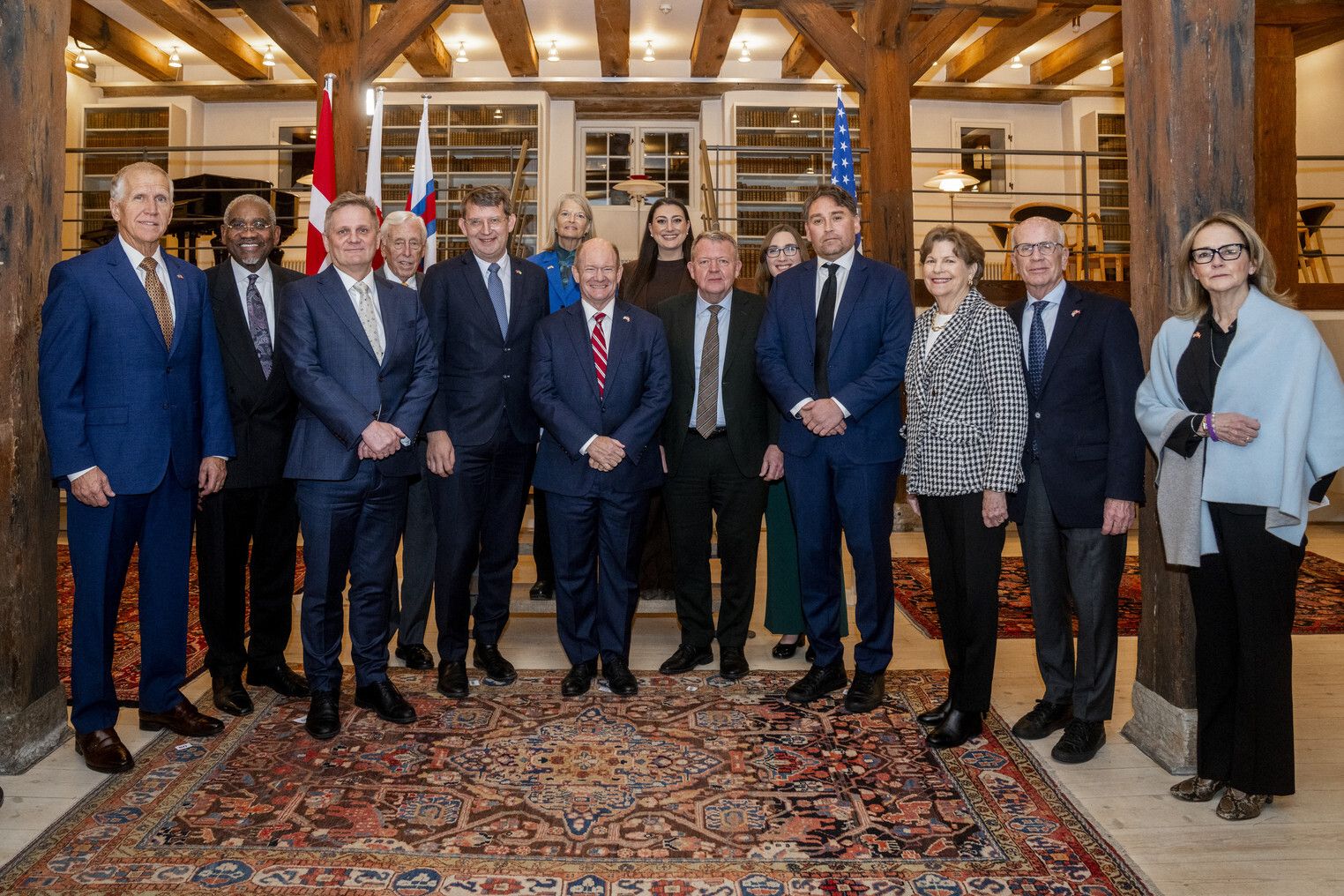
Ten members of Congress traveled to Denmark last week to express their support for Greenland’s sovereignty.
Congressional News
Lawmakers from both chambers released a bipartisan, bicameral Fiscal Year 2026 appropriations package today that includes funding for key departments such as Defense, Labor-HHS-Education, Transportation-HUD, and Homeland Security as part of a broader effort to avert a government shutdown ahead of the January 30 deadline. The package, which continues progress in the 12-bill appropriations process, is expected to be brought to the House floor this week with Senate consideration to follow. Included in the bill are level or increased appropriations for several federal programs, though contentious items like ICE enforcement and healthcare subsidies remain points of debate.
A bipartisan healthcare deal has been proposed that would extend several public health programs, including key telehealth flexibilities, through the end of 2027, and fund a Centers for Medicare and Medicaid Services initiative supporting hospital-at-home care through fiscal year 2030. Democrats secured a major win with a proposed increase in community health center funding to $4.6 billion for FY2026, along with a provision allowing Medicare coverage of multi-cancer early detection screening tests. However, the agreement faces uncertainty in the House, where fiscal conservatives may oppose the spending increases, and it omits several elements of President Trump’s recently unveiled “Great Healthcare Plan,” including expanded health savings accounts and certain drug pricing policies. The deal also does not restore enhanced Affordable Care Act subsidies that expired at the end of last year, contributing to rising insurance premiums for individuals covered under Obamacare plans.
Members of Congress from both parties are moving to block President Trump’s proposed tariffs on European allies that were tied to demands regarding Greenland, pushing back amid concerns the levies could damage U.S. relationships with Denmark, the United Kingdom, Germany, and France. Democratic leaders and some Republican lawmakers have signaled support for resolutions and legislation to overturn the tariff actions, though they acknowledge a veto override would require significant bipartisan cooperation. The situation has triggered diplomatic responses and underscored growing legislative concern about executive trade actions without broader congressional consultation.
Veteran News
Senator Jerry Moran, chairman of the Senate Committee on Veterans’ Affairs, announced last week that VA Secretary Doug Collins will testify before the committee on January 28 regarding the Department of Veterans Affairs’ proposed Restructure for Impact and Sustainability Effort (RISE), a plan to realign the organizational structure and governance of the VA health care system. The hearing will provide Senators an opportunity to examine how the restructuring is intended to improve access to care, workforce management, and the overall quality of health services delivered to Veterans nationwide.
In Texas, the Michael E. DeBakey VA Medical Center has become the first VA facility, and among the first hospitals nationwide, to successfully implant the OmniaSecure defibrillation lead, a cutting-edge, ultra-thin cardiac device that combines lifesaving defibrillation capabilities with physiological pacing to help Veterans with severe heart conditions. The procedure, performed on Air Force Veteran Rolandrus Butler, represents a milestone in electrophysiology care. Mr. Butler was able to return home the same day and reported feeling immediate improvements in energy and symptoms. VA cardiologists say the device’s streamlined design reduces vascular complications and enhances quality of life by preventing dangerous arrhythmias and sudden cardiac death, underscoring the VA’s commitment to adopting advanced technologies to improve Veteran health outcomes.
The Tucson VET Center honored World War II Veteran and former prisoner of war Harvey Horn on his 102nd birthday, bringing together staff, fellow Veterans, and community members in a celebration that highlighted his service and resilience. Mr. Horn, who also volunteered with the Southern Arizona VA Health Care System, reflected on his life, expressing gratitude for the support he has received and offering encouragement to other Veterans managing challenges such as PTSD. The event served both as a milestone birthday and a tribute to the sacrifices of Horn and his fellow service members during the war.
National News
A bipartisan U.S. congressional delegation traveled to Copenhagen over the weekend to reassure Danish and Greenlandic officials of continued support for Greenland’s sovereignty amid President Donald Trump’s repeated push to acquire the strategically located Arctic territory. Members of both parties emphasized that Greenland should be regarded as an ally, not an asset, and stressed respect for sovereignty, self-determination, and NATO cooperation in contrast to rhetoric coming from the White House. Senators such as Lisa Murkowski and Chris Coons reiterated that most Americans do not support President Trump’s aims and warned that aggressive policies could undermine long-standing transatlantic alliances.
The Trump Administration has linked its interest in Greenland to national security concerns, arguing that China and Russia have designs on the island, and has even threatened 10 percent tariffs on imports from European nations opposing U.S. plans, escalating tensions with allied countries. Both Danish Prime Minister Mette Frederiksen and Greenland’s leaders have adamantly rejected the notion of selling or transferring control of the island, reaffirming their commitment to Denmark and NATO. Large protests under the slogan “Hands off Greenland” have taken place in Copenhagen and Nuuk as local residents express fear and anger over potential coercive actions.
QUOTE OF THE WEEK
“Greenland needs to be viewed as our ally, not as an asset.”
FOR FUN
Last night, Indiana won its first-ever College Football Playoff National Championship, defeating Miami 27-21 to complete a perfect 16-0 season and cap a historic run.
JOIN THE NIMITZ NETWORK!
Enjoying our updates? Don’t keep it to yourself — forward this email to friends or colleagues who’d love to stay informed. They can subscribe here to become part of our growing community.
Interested in our other publications? Please subscribe by clicking below:
|

|
