- The Nimitz Report
- Posts
- EXPLORE America250: Enhancing Accessibility at our National Parks and Public Lands
EXPLORE America250: Enhancing Accessibility at our National Parks and Public Lands
Questionable spending or necessary investments? A deeper dive into yesterday's HVAC Economic Opportunity Subcommittee hearing.
⚡ICYMI⚡
“EXPLORE America250: Enhancing Accessibility at our National Parks and Public Lands”
House Committee on Natural Resources, Subcommittee on Federal Lands
April 22, 2026 (recording here)
HEARING INFORMATION
Witnesses & Written Testimony (linked):
Mr. Joe Stone, Co-Owner, Dovetail Trail Consulting
Ms. Julie Howell, Associate Legislative Director for Government Relations, Paralyzed Veterans of America
Ms. Maureen Elias, Deputy Director of Government Affairs – Veterans, Wounded Warrior Project
Mr. Mike Passo, Executive Director, American Trails
TOP-LINES TO SHOW YOU ARE IN THE KNOW
This hearing made clear that the EXPLORE Act is intended to expand access to public lands for all Americans, with particular attention to veterans and individuals with disabilities.
There was broad agreement that outdoor recreation plays an important role in supporting veterans’ well-being, including mental health, rehabilitation, and social connection.
Witnesses emphasized that a major barrier is not just physical access, but lack of clear, reliable information that allows people to plan and navigate outdoor experiences safely.
Members and witnesses repeatedly raised concerns that staffing shortages and budget cuts across federal land agencies are already delaying projects and could limit the Act’s effectiveness.
There was also discussion of the need to address both physical and cognitive accessibility, including better signage, wayfinding, and pre-visit information.
At its core, the conversation focused on ensuring that the EXPLORE Act leads to real improvements on the ground and makes public lands more accessible and usable for a broader range of people.
PARTY LINE PERSPECTIVES
Republicans 🐘 Focused on expanding access to public lands while maintaining existing infrastructure, raising concerns about trail closures, overregulation, and ensuring that accessibility improvements do not limit broader public use. They also emphasized the importance of partnerships and questioned how federal agencies can better leverage outside organizations and volunteers to improve access efficiently. | Democrats 🫏 Emphasized the need for increased funding and staffing for federal land management agencies, warning that workforce reductions and budget cuts could undermine implementation of the EXPLORE Act. They also highlighted equity and inclusion, stressing that accessibility must account for a wide range of physical and cognitive disabilities and ensure all communities feel welcome on public lands. |
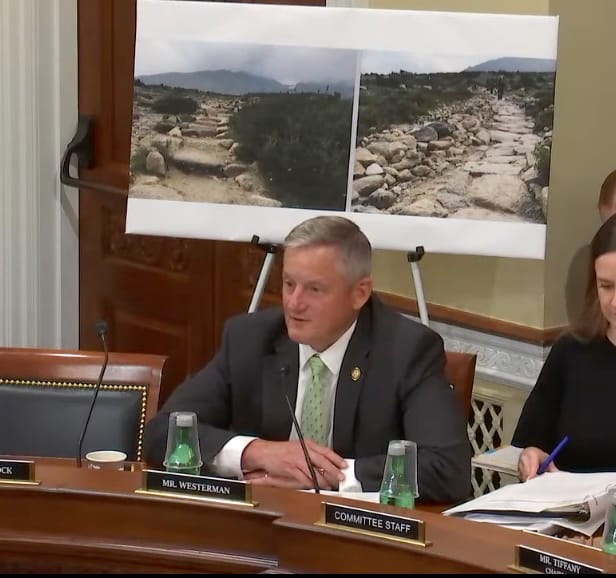
OPENING STATEMENTS FROM THE SUBCOMMITTEE
Chairman Westerman emphasized that the EXPLORE Act aimed to expand accessibility across national parks and public lands through practical, often small-scale improvements that could significantly enhance access for individuals with disabilities. He explained that beyond physical infrastructure, the legislation also focused on improving access to information about trails and conditions, ensuring visitors could plan effectively before arriving. He highlighted the importance of partnerships and ongoing implementation efforts, noting that additional funding and legislative updates, such as modifications to the Great American Outdoors Act, would be necessary to support accessibility projects. He concluded by expressing bipartisan support for advancing these efforts and acknowledged contributors who helped develop the legislation.
Note: This summary reflects only the portion of the hearing available in the recording, which was partially cut off.
SUMMARY OF KEY POINTS
Mr. Joe Stone described his personal experience as a wheelchair user and explained how barriers in outdoor spaces often prevented people with disabilities from fully participating in recreation. He shared specific examples illustrating how lack of accessibility and insufficient pre-visit information excluded individuals, including disabled veterans, from public lands. He argued that improving accessibility and trail information would benefit a broad range of users and emphasized that the EXPLORE Act could help close existing gaps if properly funded. He concluded by urging Congress to provide dedicated funding and include people with disabilities in implementation efforts.
Mr. Mike Passo emphasized that the EXPLORE Act represented a major opportunity to expand access to public lands but warned that without sufficient staffing and funding, it could become an unfunded mandate. He shared his personal story of becoming paralyzed and explained how outdoor recreation played a central role in identity and well-being. He argued that the primary barrier to improving access was not policy but limited agency capacity, citing workforce reductions and stalled projects despite available funding. He concluded that accessibility should be viewed as a universal issue and stressed the need to align resources with the goal of expanding access.
Ms. Julie Howell explained that Paralyzed Veterans of America supported the EXPLORE Act’s accessibility provisions, particularly for disabled veterans, and highlighted the organization’s long history of advocating for disability rights. She described how adaptive sports and outdoor programs contributed to rehabilitation, community reintegration, and well-being for veterans with spinal cord injuries. She emphasized that while the legislation had strong potential, inconsistent enforcement of existing accessibility laws and constrained agency funding posed significant challenges. She concluded that successful implementation would require sustained funding, strong partnerships, and effective evaluation systems.
Ms. Maureen Elias stated that outdoor recreation played a critical role in helping veterans heal, reconnect, and regain confidence after military service. She emphasized that access depended not only on physical infrastructure but also on clear, reliable information that allowed veterans to plan and navigate outdoor experiences independently. She provided examples of veterans whose physical and mental health improved through adaptive outdoor programs, highlighting the importance of supportive and accessible environments. She concluded that careful implementation of the EXPLORE Act, including better information systems and inclusive design, would be essential to ensuring meaningful access for veterans.
Chairman Westerman asked how expanding the Great American Outdoors Act to include accessibility projects not classified as deferred maintenance could help fund and implement the goals of the EXPLORE Act. Mr. Stone responded that expanding funding beyond baseline accessibility projects could unlock broader opportunities for people with disabilities, particularly when those individuals were included in planning and implementation. Mr. Passo emphasized that accessibility should begin with basic infrastructure such as parking, noting that adequate accessible parking was essential for participation. Ms. Elias added that additional resources could support accessibility improvements during maintenance but cautioned against blurring program goals and encouraged inclusion of cognitive accessibility considerations.
Rep. Randall asked how federal workforce reductions and proposed budget cuts would impact implementation of the EXPLORE Act. Mr. Passo explained that reduced staffing had already stalled projects despite available funding, making implementation significantly more difficult. Ms. Howell added that limited resources delayed even small accessibility fixes and raised concerns that broader implementation efforts would face similar obstacles without sufficient staffing and funding.
Rep. Stauber asked about inconsistencies in how federal agencies interpret the term “wheelchair.” Ms. Howell responded that different agencies applied varying interpretations, leading to inconsistent standards across federal lands. Rep. Stauber then asked about the role of outside organizations in helping veterans access public lands, and Ms. Elias explained that organizations like Wounded Warrior Project served as critical entry points by helping veterans navigate outdoor environments and adapt to new physical limitations.
Rep. Dexter asked about the importance of trail maintenance and accessibility, including how accessible trails should be defined. Mr. Passo responded that accessibility depended heavily on clear, detailed information about trail conditions, allowing individuals to determine whether they could safely participate. When asked about accessible parking and entry points, he added that accessibility varied widely by location, with national parks generally more accessible than forests and Bureau of Land Management lands.
Chairman Tiffany asked for examples of access challenges in national forests. Mr. Passo explained that barriers such as road closures and physical obstructions limited access but could often be mitigated with minor modifications to improve accessibility.
Chairman Tiffany then asked how organizations could help expand access more quickly, and Ms. Elias responded that organizations could serve as both information distributors and volunteer partners, helping share resources and support implementation efforts.
Rep. Stansbury asked about the importance of outdoor access for veterans and how Congress could improve support. Ms. Howell emphasized that intentional implementation and clear communication, including information about trail conditions and weather impacts, were essential. Ms. Elias added that successful implementation would require sustained resources, strong partnerships, and inclusion of people with disabilities in decision-making.
Rep. Stansbury also asked how improving accessibility supports veterans with cognitive disabilities. Ms. Elias explained that clear wayfinding, accessible information, and predictable environments helped reduce anxiety and disorientation, enabling veterans to participate more confidently in outdoor activities.
SPECIAL TOPICS
🖤 Mental Health & Traumatic Brain Injury (TBI):
Ms. Elias explained that outdoor recreation supported veterans’ mental health by helping reduce stress, rebuild confidence, and strengthen social connection, particularly for those coping with PTSD and other service-related conditions.
Ms. Elias described a veteran with PTSD and a traumatic brain injury who experienced reduced isolation and a renewed sense of purpose after participating in an outdoor program, emphasizing the role of nature and camaraderie in recovery.
Ms. Elias noted that veterans with cognitive conditions, including TBI, may struggle with wayfinding, attention, and risk perception, and she emphasized that clear signage and reliable pre-visit information were critical to enabling safe and independent participation.
JOIN THE NIMITZ NETWORK!
Enjoying our updates? Don’t keep it to yourself — forward this email to friends or colleagues who’d love to stay informed. They can subscribe here to become part of our growing community.