- The Nimitz Report
- Posts
- Improving Veterans' Lives through Sports
Improving Veterans' Lives through Sports
How adaptive sports support veterans’ health, purpose, and connection long after service.
⚡NIMITZ NEWS FLASH⚡
“Independent Spirits: Veteran Health & Healing through Adaptive Sports”
Senate Veterans Affairs Committee Hearing
February 4, 2026 (recording here)
HEARING INFORMATION
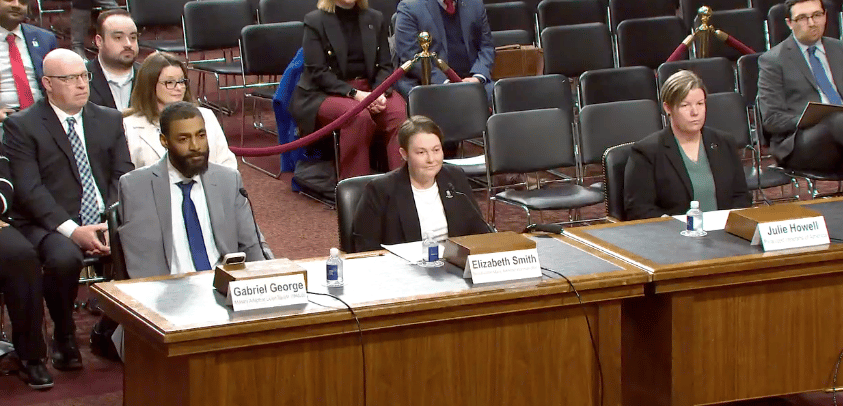
Witnesses & Written Testimony (linked) (Panel One):
Gabriel George: Director of Pickleball and Adaptive Sports Ambassador, Military Adaptive Court Sports (MACS)
Elizabeth Smith: U.S. Navy Aviation Maintenance Administrationman (Ret.)
Julie Howell: Associate Legislative Director for Government Relations, Paralyzed Veterans of America
Witnesses & Written Testimony (linked) (Panel Two):
Rachel McArdle, Ph.D.: Deputy Executive Director, Rehabilitation and Prosthetics Service, Veterans Health Administration, U.S. Department of Veterans Affairs
TOP-LINES TO SHOW YOU ARE IN THE KNOW
Adaptive sports came through loud and clear as a mental-health intervention, not just recreation, with multiple witnesses describing reduced isolation, restored purpose, and even fewer suicidal thoughts.
Rural veterans were consistently left behind, not because programs do not exist, but because information, transportation, and local points of contact break down outside major VA facilities.
Veterans made it clear that adaptive sports help with real rehabilitation needs, including recovery from traumatic brain injury and chronic pain, even when those benefits are not always recognized by the system.
The biggest access gap was not elite competition but everyday participation, as most veterans just want affordable, local ways to stay active with family and community.
There was broad agreement that adaptive sports should be treated as part of the VA’s core healthcare mission, especially given their impact on mental health, long-term outcomes, and quality of life.
PARTY LINE PERSPECTIVES
Republicans 🐘 Stressed cutting red tape, improving access through better transportation and prosthetics policy, and making sure VA programs work efficiently so veterans can stay active, independent, and connected to their communities. | Democrats 🫏 Focused on adaptive sports as a proven way to support veterans’ mental health, reduce suicide risk, and treat the whole veteran, while pressing the VA to close equity gaps for rural veterans and women veterans. |
OPENING STATEMENTS FROM THE COMMITTEE
Chairman Jerry Moran opened the hearing by expressing enthusiasm for holding it ahead of the 2026 Winter Olympics and Paralympics and highlighting the importance of the VA’s adaptive sports programs for veterans with disabilities. He praised veteran athletes training and competing for Team USA and noted their inspirational role for other veterans and the nation. He welcomed the witnesses and asserted his interest in ensuring these opportunities were accessible to all who could benefit.
Ranking Member Richard Blumenthal commended the veteran athletes for representing the country and demonstrating how adaptive sports could change lives. He praised the work of VA therapists, veteran service organizations, and local adaptive sports groups for providing essential support to veterans. He then shared a testimonial from a veteran to underscore the life-changing impact of adaptive sports on mental health, confidence, and community connection.
SUMMARY OF KEY POINTS (PANEL ONE)
Mr. Gabriel George described his military service, life-altering injuries, and the period of pain and purposelessness he experienced after medical retirement. He explained how participation in a VA Summer Sports Clinic introduced him to adaptive sports, which restored his sense of purpose and led him to elite competition and community leadership. He illustrated the transformative power of adaptive sports not only for elite athletes but also for veterans seeking basic reengagement and well-being. Mr. George highlighted ongoing challenges with funding access, administrative burdens, and the need for broader support to sustain participation for veterans and their families.
Ms. Elizabeth Smith shared her experience of being diagnosed with brain and spine cancer while on active duty and the physical and emotional losses she faced after treatment and medical retirement. She explained how adaptive sports reignited her sense of identity, hope, and purpose during recovery. She described barriers she encountered accessing VA adaptive sports when she was not training at an elite level and credited community organizations supported by VA grants for filling those gaps. She urged that adaptive sports be made accessible to all veterans, regardless of location or competitive ability, as a vital component of holistic well-being.
Ms. Julie Howell discussed the critical role adaptive sports played in the health, independence, and quality of life of veterans with spinal cord injuries and disorders. She outlined Paralyzed Veterans of America’s nationwide adaptive sports programs and its long-standing partnership with the VA, including hosting the National Veterans Wheelchair Games. She outlined pending legislation aimed at improving transportation access, home modifications, and adaptive prosthetics for disabled veterans. Ms. Howell stressed that adaptive sports were a powerful tool for transformation, empowerment, and community integration for veterans at all levels of participation.
Chairman Moran was especially interested in Ms. Smith’s comments about rural access and asked what she had seen and how it could be fixed. Ms. Smith said she had sought an appointment in Buffalo, New York, and she had expected support similar to what she had seen in major VA areas. She had been told she would not get an appointment because she was not trying to be a Paralympian and was directed to outside organizations without any real help connecting to resources. The experience made her feel dismissed and reinforced feelings of not being “enough” at a time when she was already struggling.
The Chairman broadened the discussion to the upcoming Olympics and Paralympics and asked what opportunities senators had before, during, and after the Games to highlight veteran athletes and educate other veterans about adaptive sports programs. He asked how the Committee could “market” these opportunities. Mr. George said the right word was “marketing” and argued that the public needed to see the full athlete’s story, not just the victories.
Ranking Member Blumenthal asked the panel what the greatest challenges were for veterans seeking VA prosthetics and whether the main issue was getting new devices or repairing and replacing existing ones. He also asked how often veterans had to use personal funds beyond monthly allowances to cover equipment and basic needs.
Ms. Smith said the biggest challenge was the number of hoops and questions veterans had to answer before getting even basic support. She also described delays and bureaucratic runarounds that made it hard to request anything, implying that the same barriers affected adaptive sports equipment.
Mr. George replied that his experiences with prosthetics varied depending on whether the VA could classify and source the item. He said adaptive sports devices functioned as medical devices for him because they supported therapy and well-being, and approvals depended on finding clinicians who knew how to write requests properly.
Ms. Howell responded that PVA members often accessed care through the spinal cord injury/disorder system of care, which typically included prosthetic support, recreation therapy, and other services. She reported that PVA had not recently heard of problems severe enough to require Committee attention because issues were often remediated quickly within that system.
The Ranking Member asked about the kinds of delays being discussed. Ms. Smith elaborated that delays were often about simply getting in front of the right people for answers, including community care consults. She stated that the VA could not schedule her in a timely way due to provider shortages, and she said community care providers had turned her down because the referral was coming from the VA.
Sen. Tommy Tuberville referenced the ASSIST Act (S. 1726) and asked Ms. Howell how it would help more veterans benefit from adaptive sports by expanding access to automobile modifications. Ms. Howell said accessible transportation was essential, especially for rural veterans, because many relied on their own vehicle as the only way to reach appointments and community opportunities. She urged passage because it would remove barriers that prevented veterans from adapting vans and vehicles.
Sen. Tuberville inquired about the biggest barriers for PVA members trying to participate in adaptive sports beyond transportation. Ms. Howell replied that hosting and attending large events required accessible cities, convention spaces, and a sufficient supply of accessible hotel rooms. She also said that another key barrier was that the VA adaptive sports grant could not be used for veteran travel, leaving veterans to cover airfare and transit costs.
Sen. Tuberville asked Mr. George how the Committee could ensure veterans had access to information about the kinds of programs that helped him. Mr. George identified that communication was the biggest issue and that his entry point had been a recreational therapist. He claimed many doctors did not know what recreational therapy was, and some VA areas did not have recreational therapists at all.
Sen. Maggie Hassan highlighted how sports and recreation helped veterans build complete lives and asked about the value of outdoor recreation opportunities and how Congress and the VA could expand them. Ms. Howell asserted that outdoor recreation helped veterans build confidence and stay active between major structured events. She believed that teaching veterans how to use equipment, understand limits, and adapt to real-world conditions reduced anxiety and empowered them to engage beyond formal sports settings.
Sen. Hassan followed up by asking about the challenges rural veterans faced and how organizations worked to fill gaps, while acknowledging transportation barriers. Ms. Howell replied that rural veterans often faced layered barriers, including a lack of recreational therapy connections, inaccessible local infrastructure, and limited transportation options. She emphasized that adaptive sports did not exist in a vacuum and that access depended on broader mobility and community accessibility.
Sen. Angus King suggested community-based outpatient clinics could serve as information hubs and claimed that veterans often lacked information about available opportunities. He connected sports to suicide prevention and asked about expanding transportation options, including involving DAV. Mr. George agreed sports helped combat suicide and said access to amateur and local opportunities was crucial for veterans who were not elite competitors. He stated that community tournaments and clinics could reduce cost barriers and build belonging.
Sen. King asked how to make programs more widespread for non-elite veterans and noted concern that resources are only focused on those at higher levels. Mr. George confirmed that elite stipends existed but there were few supports for local participation like tournament fees or basic access. Organizations relied on VSOs and nonprofits to fill gaps and create low-cost, entry-level events.
Sen. Mazie Hirono stated that the benefits of recreational therapy and adaptive sports extended beyond the small percentage of veterans in elite programs. She posited that recreational therapy and adaptive sports should be part of the VA’s core mission to ensure consistent access across states and facilities. Ms. Smith said the VA promoted some programs but often failed to meaningfully connect veterans to real, community-building activity. Rural areas lacked options, and veterans were not consistently told how to get healthy beyond remote monitoring or group sessions. Ms. Howell agreed and said adaptive sports also improved clinical outcomes over time, such as cardiovascular strength and physical function, which could reduce future care needs.
Sen. Jim Banks asked what the VA was doing well today and how veterans still fell through the cracks, referencing a 1975 PVA quote about veterans being cast aside. Ms. Howell replied that the VA adaptive sports grant program had been running efficiently and that staff had been engaged and responsive. She acknowledged that the VA would never capture 100% of veterans and that community organizations helped fill gaps, especially in rural areas. She believed that more awareness and messaging were needed to reach veterans who were still being missed.
Sen. Banks playfully asked Mr. George to be his partner in a Senate pickleball tournament and then asked how sports had helped his recovery and well-being. Mr. George shared that competition and training gave him purpose and helped him cope with pain by giving him goals and something to look forward to. He said he competed not only for himself, but for others watching, to show what was possible, while also acknowledging the sacrifices and financial burdens involved.
Sen. Marsha Blackburn asked about the effectiveness of communication between VA clinicians, recreational therapists, and grant-funded community organizations to create a continuum of care. Mr. George reported that he had benefited from an outstanding recreational therapist who kept veterans informed, connected, and supported through programs and calendars of events. He said many veterans did not have that level of support and that rural areas often lacked recreational therapists, which created communication gaps. Ms. Smith stated there had been no meaningful continuum when she transitioned out of the Navy Wounded Warrior program and sought ways to stay active through the VA. She believed community organizations could help, but rural areas often lacked enough local options, and travel still imposed costs and burdens.
SUMMARY OF KEY POINTS (PANEL TWO)
Dr. Rachel McArdle described the VA’s adaptive sports program as a vital, clinically integrated component of rehabilitation that helped veterans with disabilities regain independence, improve physical and mental health, and reconnect with their communities. She outlined the VA’s six national rehabilitation events and emphasized that these programs served veterans with a wide range of disabilities, while grants and equine-assisted therapy supported more than 20,000 veterans through community-based organizations. She then discussed the department’s support for the intent of four pending bills, while recommending technical amendments to clarify eligibility, implementation, and avoid unintended consequences.
Chairman Moran asked broadly whether there were themes from the first panel the witness wished to respond to, particularly regarding access challenges in rural and small-town communities. Dr. McArdle said she frequently heard similar concerns when attending national rehabilitation events and speaking with grantees. She explained that the VA had created a mentor–mentee program to share best practices across facilities and strengthen adaptive sports programming in both rural and urban areas. She noted that VA grants ranged from small awards under $4,000 to large grants up to $750,000, allowing organizations of all sizes to apply.
Ranking Member Blumenthal questioned whether contracts had been canceled as a result of the DOGE program and specifically whether contracts related to adaptive vehicles had been affected. He also asked whether other rehabilitation or prosthetics contracts had been canceled and whether staffing losses had occurred due to workforce reductions. Dr. McArdle was unaware of any canceled contracts related to adaptive vehicles but committed to checking the record and reporting back. She stated that, within rehabilitation and prosthetic services, no contracts had been canceled as a result of DOGE involvement. She also said she was not aware of staffing cuts affecting rehabilitation programs and that adaptive sports programs had not experienced negative impacts beyond natural attrition.
The Ranking Member then raised concerns about Summit Adaptive Sports, a Connecticut-based organization, having difficulty connecting with veterans through the New Haven VA clinic. He asked whether VA could intervene to help facilitate outreach. Dr. McArdle said she would be happy to follow up with the senator’s office to obtain details and assist with outreach efforts. She expressed willingness to engage directly to help resolve the issue.
Sen. King asked whether disabled veterans were routinely notified about adaptive sports opportunities and whether there was an automatic notification process. He expressed concern that many veterans were unaware of available programs despite their potential benefits. Dr. McArdle responded that notification practices varied and acknowledged that marketing and awareness remained challenges. She described ongoing efforts to develop a navigational resource or app to help veterans find opportunities in their communities.
Sen. King noted that while 20,000 veterans participated in these programs, roughly 9 million veterans were enrolled in VA care. He suggested that veterans should routinely be informed about adaptive sports opportunities as part of intake or ongoing care. Dr. McArdle agreed that broader outreach was needed and mentioned that VA grants included an outreach requirement for recipient organizations. She agreed to take Senator King’s suggestion under advisement for the record.
SPECIAL TOPICS
🖤 Mental Health & Suicide Prevention:
Mental health was repeatedly identified as a core benefit of adaptive sports participation. Witnesses described adaptive sports as reducing depression, anxiety, isolation, and feelings of purposelessness, particularly during transitions out of military service or elite programs.
Witnesses and Committee members underscored that adaptive sports helped veterans rebuild identity, confidence, and community, which were described as essential complements to traditional clinical care. They discussed reframing adaptive sports as part of holistic healthcare rather than an optional or recreational add-on.
Ms. Howell testified that PVA members who engaged in adaptive sports reported reduced or eliminated suicidal ideation and decreased reliance on mental health medications.
📋 Government Contracting:
Government contracting issues arose in relation to the DOGE program. Ranking Member Blumenthal asked whether contracts, specifically those related to adaptive vehicles, had been canceled due to DOGE-driven contract terminations. Dr. McArdle stated she was unaware of any such cancellations within rehabilitation and prosthetic services but committed to verifying the record.
🧠 Traumatic Brain Injury (TBI):
Mr. George described sustaining multiple traumatic brain injuries that contributed to chronic pain, paralysis, and long-term disability.
Ms. Smith described cognitive, sensory, and functional impairments following cancer treatment that mirrored many TBI-related challenges, such as difficulty processing information and rebuilding identity. Adaptive sports were described as effective rehabilitation tools for veterans with TBI, helping improve confidence, function, and mental health.
JOIN THE NIMITZ NETWORK!
Enjoying our updates? Don’t keep it to yourself — forward this email to friends or colleagues who’d love to stay informed. They can subscribe here to become part of our growing community.