- The Nimitz Report
- Posts
- Incrementalism vs. Inaction: Yesterday's HVAC Markup
Incrementalism vs. Inaction: Yesterday's HVAC Markup
The Committee favorably reported five bills after hours of partisan disagreement over whether to take a smaller win now or hold out for a broader funding solution.
⚡NIMITZ NEWS FLASH⚡
Markup on Pending Legislation
House Veterans Affairs Committee
February 12, 2026 (recording here)
BILLS CONSIDERED IN MARKUP
H.R. 6047, the Sharri Briley and Eric Edmundson Veterans Benefits Expansion Act of 2025
H.R. 3726, the Fisher House Availability Act of 2025
H.R. 3482, the Veterans Community Care Scheduling Improvement Act
H.R. 785, the Representing our Seniors at VA Act of 2025
H.R. 2148, the Veteran Caregiver Reeducation, Reemployment, and Retirement Act
OTHER MARKUP INFORMATION
At the conclusion of the session, the House Veterans Affairs Committee favorably reported five bills to the full House.
All controversial votes fell along party lines, with the exception of the final two recorded votes on Chairman Mike Bost’s amendment in the nature of a substitute to H.R. 6047 and the final vote on the same bill. Only one Democrat voted with the Republicans to pass the bill out of Committee and move it to the full chamber.
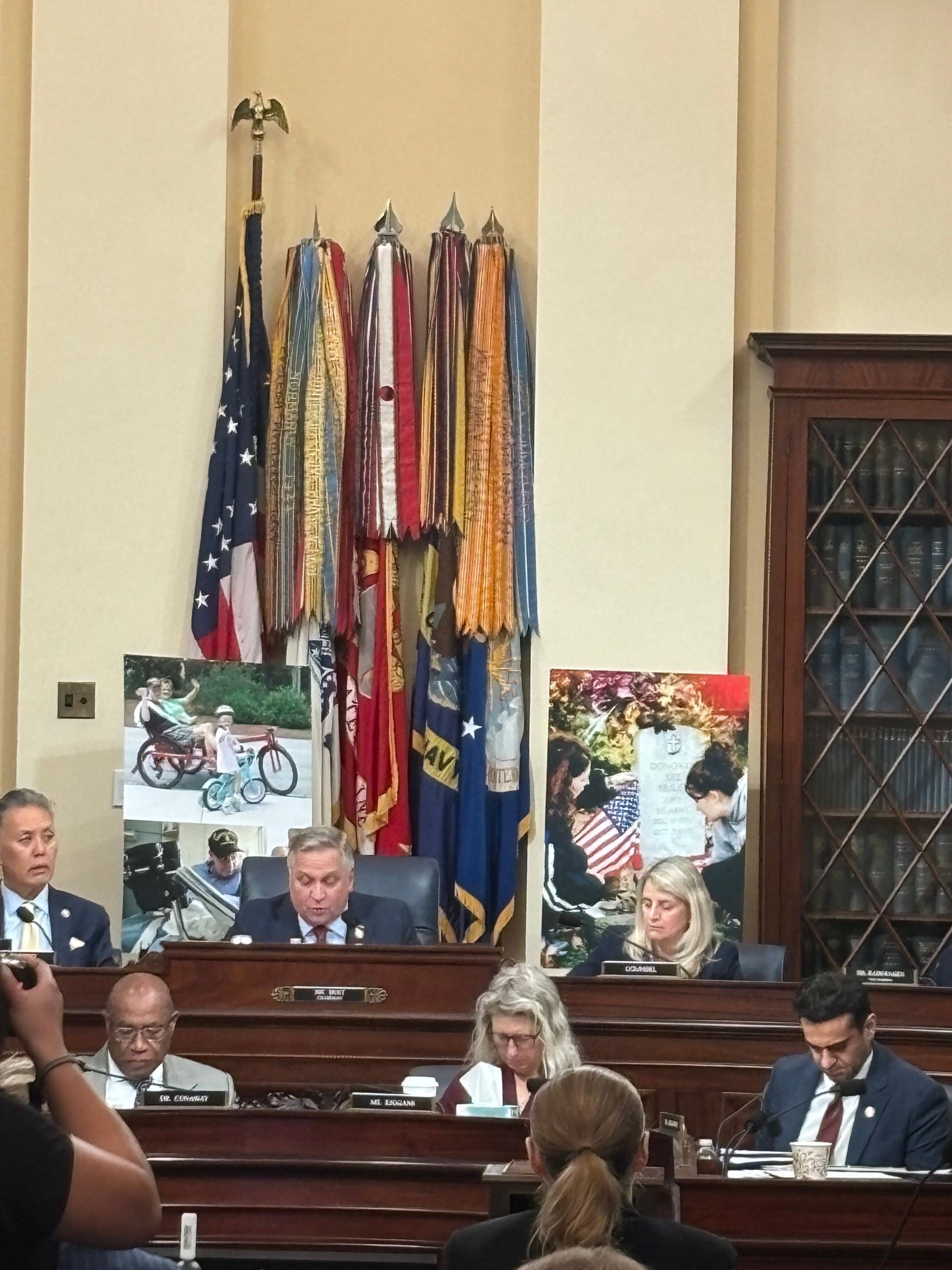
OPENING STATEMENTS FROM THE COMMITTEE
Chairman Mike Bost explained that the Committee was considering five bipartisan bills shaped by feedback from veterans, survivors, and their families, including the Sharri Briley and Eric Edmundson Veterans Benefits Expansion Act of 2025 (H.R. 6047). He explained that the bill honored severely wounded veterans and families of those who died from service-related causes and strengthened their financial stability. He expressed hope that the Committee would report out legislation that delivered meaningful support to veterans and their families.
Ranking Member Mark Takano criticized the agenda for lacking bipartisan balance. He supported increasing Special Monthly Compensation (SMC) and Dependency and Indemnity Compensation (DIC) but expressed disappointment that the latest draft reduced the proposed DIC increase and called the $24 per month increase insufficient. He strongly opposed funding the increases by the proposed offsets, arguing that veterans should not bear the cost of benefits they had earned. He said that Democrats were offering alternative funding amendments and that they would not support the bill as written if it continued to rely on money from veterans and service members.
SUMMARY OF KEY POINTS ON THE EN BLOC
Chairman Bost asked for unanimous consent to consider H.R. 785 and H.R. 3726 en bloc. There was no objection, and he moved that the amendments in the nature of a substitute for both bills be considered as the base text.
The Committee agreed by voice vote to both amendments and then agreed by voice vote to report the en bloc to the full House.
SUMMARY OF KEY POINTS ON H.R. 3482
The Chairman called up H.R. 3482 and recognized Rep. Nikki Budzinski to offer an amendment in the nature of a substitute (ANS) as base text. Rep. Nikki Budzinski spoke on her ANS, which would ensure that any scheduling program authorized at the VA produced meaningful improvements for veterans and employees. She said the proposal built toward an integrated “one-stop” scheduling solution that showed real-time availability for both the VA and community providers, expanded data collection to identify access gaps, required benchmarks and staff training, and directed the VA to submit an integration plan within 90 days with timelines, cost estimates, and policy changes.
Chairman Bost supported the amendment, as it would add accountability measures and improve community care scheduling so veterans could book appointments faster. He shared that the underlying external scheduling partnership had rolled out in Illinois, and he supported scaling it nationwide. Ranking Member Takano also supported the ANS.
Rep. Tom Barrett offered an amendment to the ANS, providing an offset to make the bill cost-neutral. He said the legislation addressed long community care scheduling delays by requiring real-time nationwide availability, enabling faster booking, ensuring veterans were told about all appointment options, reducing bias against community care, and requiring an assessment of expanding the technology across the VA while keeping Congress informed on costs.
The amendment to the ANS and the ANS were both accepted by voice vote, and H.R. 3482, as amended, was favorably reported to the full House.
SUMMARY OF KEY POINTS ON H.R. 6047
The Chairman then called up H.R. 6047 and offered an ANS to the bill. He said the Committee had heard testimony from Sharri Briley and from Eric Edmundson’s father back in December about survivor needs and the daily realities of catastrophic injury care, highlighting the need for immediate action. The bill increased SMC for certain severely disabled veterans and adjusted DIC for survivors.
Chairman Bost stated that the ANS paid for the benefit increases by extending and adjusting certain VA home loan fees while maintaining the fee waiver for disabled veterans, and he repeatedly underlined that disabled veterans would not pay additional fees under current law. He stated that the DIC increase had been reduced (to 1% in the first year and 0.5% in the second year) and that SMC R1/R2/T rates would increase by $10,000 annually. The Chairman described the DIC change as a “down payment” with an intent to pursue more at a later date.
Ranking Member Takano supported raising SMC and DIC but opposed paying for it through higher home loan-related fees. He argued that Congress should pay for earned benefits with taxpayer dollars rather than shifting costs onto veterans and service members, and he pledged that Democrats would support the bill if alternative funding amendments were adopted. He also said that even if veteran organizations supported the bill, it was Congress’s duty to find a better path forward.
Rep. Keith Self stated that the program was noble but argued that using one earned benefit to finance another effectively forced one group of veterans to subsidize another. He believed that this approach eroded the perceived value of benefits and should be replaced with more responsible offsets that did not deepen national debt.
Rep. Derrick Van Orden argued that fee increases had precedent and that the practical cost to refinancing veterans was modest on a monthly basis. He said that political posturing had delayed help for Gold Star spouses and catastrophically injured veterans, and he urged passage while also supporting longer-term reform discussions.
Rep. Morgan McGarvey underscored that increasing SMC and DIC was overdue and framed closing survivor disparities as fairness rather than generosity. He stated that the bill’s DIC changes did not go far enough toward parity and criticized the idea that veterans should have to fund each other’s benefits through home loan fees, while urging the Committee to choose a better path with urgency.
Rep. Van Orden pointed out that the provisions that had raised concern among the Democrats in the December legislative hearing had been removed from the pay-for, and he reiterated that disabled veterans were not included in the fee changes. He urged Congress to take achievable wins, seeing passage as a meaningful improvement, and publicly committed to working with colleagues on broader structural funding reform for the future.
Ranking Member Takano clarified that the Blue Water Navy legislation, which had raised similar fees in the past, had been bipartisan and that its fee increase had been temporary, and he argued that the current approach risked normalizing veterans paying for veterans’ benefits. He restated that interest and capitalization could raise the practical monthly cost beyond the headline figure and said Congress still had a responsibility to find a better funding method.
Rep. Van Orden said that the fee increase in this proposal was not permanent either and argued that objections were being made for political rather than policy reasons.
Rep. Kelly Morrison offered an amendment to the ANS, eliminating the bill’s proposed offsets and instead redirecting $5 billion from Immigration and Customs Enforcement (ICE) funding to pay for the benefit increases. She supported increasing SMC and DIC but opposed funding them through higher fees tied to the VA home loan program, and she urged adoption of her amendment.
The Chairman stated that the amendment was outside the Committee’s jurisdictional and budgetary constraints and argued it relied on discretionary appropriations to fund mandatory benefit expansions, which he said was not allowable. He said the amendment would derail the bill and accused Democrats of using the issue for political points.
Rep. Delia Ramirez shared that the amendment would claw back $5 billion from what she described as a Department of Homeland Security/ICE “slush fund” and use it to increase veterans’ compensation benefits. She argued that Congress should redirect resources away from enforcement activities she called “abusive” and toward veterans and affordability needs. Rep. Ramirez cited incidents involving veterans being detained or mistreated by ICE and argued that the amendment better aligned spending with priorities.
Rep. Van Orden spoke up again, claiming the debate had shifted into Homeland Security issues rather than Veterans Affairs issues. He believed the amendment and the discussion were not relevant to the Committee’s job of advancing benefits for catastrophically injured veterans and Gold Star spouses. He urged members to stay focused on passing H.R. 6047 and then pursue long-term reforms separately.
Ranking Member Takano said the amendment was a legitimate example of looking outside the Committee’s jurisdiction for offsets, consistent with the idea that members should identify “less noble” spending elsewhere. He said ICE had been overfunded and argued that redirecting a portion of those funds would reflect better national priorities than increasing fees on veterans and service members. He framed the amendment as reallocating spending toward catastrophically injured veterans, caregivers, and survivors.
Rep. Ramirez said it was inconsistent to call the ICE discussion “political” when the examples raised involved veterans who had been impacted by that agency’s actions. She argued that talking about veterans harmed or targeted by ICE was relevant to the Committee’s responsibility to stand up for all veterans. She then referenced polling that showed broad public support for spending more on veterans than on ICE, and she argued the amendment aligned with that preference.
Rep. Van Orden asked whether the specific veterans mentioned were refinancing VA home loans, and he argued that if they were not, the examples were not germane to the bill’s pay-for mechanism. Rep. Ramirez replied that her remarks were germane to the amendment because redirecting funds could help many veterans beyond the specific examples she cited, including by expanding access to homeownership and resources. She also said she had viewed the Veterans Affairs Committee as a place for bipartisan work and argued the amendment provided a way to fund benefits without charging veterans.
Rep. Self said the text of the amendment looked like an appropriations measure and did not belong in the Veterans Affairs Committee. He did not understand why it was on the Committee’s agenda.
Chairman Bost reiterated that the amendment tried to use appropriated discretionary funds for mandatory benefits, which he said violated how House rules separated those categories. He believed the amendment was being offered for political messaging, and he emphasized that the Committee had to follow House rules to advance the bill promptly.
Ranking Member Takano acknowledged House rules but said the Committee could still move the bill while working with other committees, including appropriators, to find acceptable funding. He claimed he had discussed potential funding solutions with other leaders and argued that the Committee did not need to rely on fee increases paid by veterans and service members.
A recorded vote on this amendment was requested and later voted down along party lines, 12-11.
Rep. Herb Conaway offered an amendment to the ANS. He observed the broad agreement that SMC and DIC should be increased, but he argued it was problematic to fund those increases by raising fees on other veterans during an affordability crisis. His amendment would limit the funding-fee increases so they would apply only to people who joined active duty or the reserves after the date of enactment, and he framed that as honoring the “contract” and promised benefits that service members believed they had when they joined. He acknowledged that the amendment did not go as far as some members wanted, but he argued it would at least avoid changing the deal for those who had already served or were already serving.
Chairman Bost opposed the amendment, saying it would not raise enough savings because the Congressional Budget Office (CBO) had indicated it would fall 10–15% short. The amendment would also create administrative complexity by requiring different fee rates for a newly created population, forcing changes to VA systems, regulations, and implementation practices, and he claimed it had not been vetted with the mortgage industry. He argued the amendment would effectively “kill the bill” by making it unworkable to advance.
Ranking Member Takano called the amendment common sense. He said military service involved a contract and that Congress should not change benefit terms midstream for those already in service or already served.
A recorded vote on this amendment was requested and later voted down along party lines, 12-11.
Rep. Maxine Dexter then introduced her amendment to the ANS. She agreed that it was unacceptable that DIC and SMC had fallen behind economic realities and that survivors faced rising costs while rebuilding their lives. She pointed out that Congress had repeatedly found resources when it wanted to fund priorities and argued the same urgency should apply to survivors and catastrophically injured veterans. Her amendment would offset the DIC increase by modestly lowering the estate tax exemption threshold (described as moving it from $15 million to $14.5 million for six years), which would generate about $5 billion and would avoid taking money from veterans or service members.
Chairman Bost stated the amendment would change the Tax Code and was outside the Committee’s jurisdiction. He said the proposal would stall and endanger passage of the bill and argued it would make end-of-life planning harder for Americans.
Ranking Member Takano said the amendment redirected only a small fraction of wealth and would not materially affect anyone inheriting at that level. He believed the redirected money would meaningfully improve the lives of catastrophically injured veterans, caregivers, and survivors.
As before, a recorded vote on this amendment was requested and later voted down along party lines, 12-11.
The Ranking Member then offered an amendment to the ANS to move the bill out of Committee without an offset, arguing there was nothing in Committee or House rules requiring an offset at that stage. He said the majority could fix the pay-for later, and he accused Republicans of lacking the political will to pursue alternatives outside the Committee.
Chairman Bost said the amendment would remove the home-loan offset and other fee modifications and argued it would amount to putting the bill “on a credit card.” He said paying for benefit expansions was mandatory and that fiscal responsibility was part of caring for veterans.
A recorded vote on this amendment was requested and later voted down along party lines, 12-11.
Rep. Dexter offered a second amendment to the ANS, saying the VA Home Loan Program represented a promise and argued that fee increases should not be imposed on veterans who used refinancing or loan assumptions for economic relief or duty-driven moves. This amendment would strike the proposed fee increases on Interest Rate Reduction Refinancing Loan (IRRRL) refinancing and loan assumptions, and she framed the change as preventing new financial strain and avoiding changes to the “promise” after veterans had already relied on it.
The Chairman argued the Committee had precedent for using home-loan fee adjustments as offsets and cited the Blue Water Navy Vietnam Veterans Act as an example that had relied in part on funding-fee adjustments. He stated the VA home loan program remained strong despite prior fee adjustments and said the Committee needed “durable” policy rather than pretending costs did not matter.
Ranking Member Takano supported the amendment and claimed that it sought to address affordability while also raising costs for those using IRRRL refinancing and loan assumptions. He said IRRRL refinancing served as a lifeline for many trying to avoid foreclosure and that the Department had not implemented other relief measures. He pointed to additional amendment options that could fully pay for either a larger DIC increase or the Chairman’s smaller increase using offsets outside the Committee, and he offered to work with Republicans on those alternatives.
A recorded vote on the amendment was requested and later voted down along party lines, 12-11.
Rep. Barrett offered an amendment to the ANS, expanding eligibility for National Guard and Reserve members to use the VA home loan earlier than current law allowed. He shared that Guard and Reserve members currently had to complete an active-duty period or fulfill an initial six-year enlistment to qualify, and his amendment made “every day in uniform” count toward earlier eligibility. He said the amendment imposed an additional premium on the funding fee because the benefit would be accessed earlier, and the change would help more than 1,000 Guard and Reserve members annually while generating revenue that could help offset the bill.
Chairman Bost praised the amendment for expanding the home loan benefit to a new group and framed it as part of Republican efforts to expand economic opportunity.
Ranking Member Takano supported parity between active duty and reserve-component benefits and agreed that every day in uniform should count. He opposed creating a “lower tier” by charging Guard and Reserve members a higher fee to generate revenue for other benefits, and he argued the amendment created a “fiscal hole” in the majority’s approach. He believed that it demonstrated the Committee could move legislation without a fully completed pay-for, which he said undercut the majority’s insistence on fee increases elsewhere in the bill. However, he agreed to vote for the amendment.
A recorded vote was requested. This was the only vote that was unanimous in its support.
A recorded vote was requested for Chairman Bost’s amended ANS. It passed 13-10.
A recorded vote was also requested for H.R. 6407, as amended. It passed 13-10.
Rep. Chris Pappas was the only Democrat who voted in favor of supporting the ANS and sending the amended bill to the full House, and it successfully moved forward.
SUMMARY OF KEY POINTS ON H.R. 2148
Chairman Bost called up H.R. 2148, and Ranking Member Takano offered an ANS to the bill. He supported caregivers transitioning after their veteran loved one died, including caregivers’ lost earning potential and financial security. He said the text would provide supports such as bereavement counseling, funds to renew professional certifications, employment assistance, and extended CHAMPVA coverage. The ANS included technical edits to reflect stakeholder feedback and to match the version reported by the Senate Veterans’ Affairs Committee in late July 2025.
Chairman Bost added that family caregivers often left the workforce and faced major challenges when caregiving ended. He said the bill expanded medical, employment, and transition supports and included studies on workforce reentry and retirement options.
The ANS was agreed to by voice vote, and H.R. 2148, as amended, was favorably reported to the full House.
SPECIAL TOPICS
👨💻 IT issues:
Rep. Barrett referenced past concerns with VA technology programs, specifically mentioning the digital GI Bill program and the Electronic Health Record Modernization (EHRM) program. He said Congress had previously been kept “in the dark” about the true costs of implementation and sustainment of large VA IT modernization efforts. He did not want the scheduling integration effort in H.R. 3482 to repeat those transparency and cost-management problems.
🏢 Veterans’ Employment:
During consideration of H.R. 2148, Ranking Member Takano explained that family caregivers often left the workforce to provide full-time care and lost years of earning potential, retirement contributions, and employer-sponsored health coverage. He said the bill would support their transition back into the workforce after their veteran loved one died.
The legislation included employment assistance programs, funds to renew professional certifications, studies on workforce reentry, extended CHAMPVA coverage, and bereavement counseling. The Chairman supported the measure and said it addressed the workforce and retirement challenges former caregivers faced.
⭐ Surviving spouses:
Members repeatedly discussed increasing DIC for surviving spouses of service members who died from service-related causes. The Chairman stated that DIC had not been meaningfully updated since 1993 and described the proposed increase as a necessary “down payment.” He said more than 500,000 survivors received DIC and emphasized that families like Sharri Briley’s had waited decades for change.
The Ranking Member stated that he supported increasing DIC but argued that the proposed increase, $24 per month under the revised version, was insufficient and did not achieve parity with survivor benefits provided to other federal families. Full parity would require roughly $430 more per month.
Multiple members described Gold Star spouses as carrying a lifetime burden and underscored the moral obligation to support them. Rep. Van Orden emphasized that surviving spouses faced a “life sentence” of sacrifice. Rep. McGarvey held that correcting DIC disparities was a matter of fairness and justice.
Disagreement centered on how to fund the DIC increase, not whether it should occur. Democrats opposed funding the increase through higher VA home loan fees. Republicans defended the offset as consistent with past precedent.
JOIN THE NIMITZ NETWORK
Enjoying our updates? Don’t keep it to yourself — forward this email to friends or colleagues who’d love to stay informed. They can subscribe here to become part of our growing community.