- The Nimitz Report
- Posts
- Promises vs. Progress: Lawmakers Press the VA on Disability Benefit Reform
Promises vs. Progress: Lawmakers Press the VA on Disability Benefit Reform
Lawmakers demanded timelines, transparency, and data as the VA defended years-long delays in modernizing disability ratings.
⚡NIMITZ NEWS FLASH⚡
“Reevaluating the Rating Schedule: Examining VA’s Efforts to Modernize Disability Benefits”
House Veterans’ Affairs Subcommittee on Disability Assistance and Memorial Affairs
January 14, 2026 (recording here)
HEARING INFORMATION
Witnesses & Written Testimony (linked) (Panel One):
Ms. Nina Tann: Executive Director, Veterans Benefits Administration, U.S. Department of Veterans Affairs
Dr. Ulia Sokol: Medical Officer, Veterans Benefits Administration, U.S. Department of Veterans Affairs
Witnesses & Written Testimony (linked) (Panel Two):
Ms. Elizabeth Curda: Director, Government Accountability Office
Dr. Philip Armour: Senior Economist, RAND
Dr. Kyleanne Hunter: Chief Executive Officer, Iraq and Afghanistan Veterans of America
Keywords mentioned:
Veterans, VASRD, mental health, data silos, women veterans, modernization, implementation delays, traumatic brain injury (TBI), transparency, disability ratings, earnings loss.
IN THEIR WORDS
“For veterans, the disability rating process is not an abstract policy exercise. It is often the moment when they sit across from the system and ask for help.”
“Veterans shouldn’t need a law degree, a medical degree, and a decade of patience just to get what they’ve earned by serving our country.”
OPENING STATEMENTS FROM THE COMMITTEE
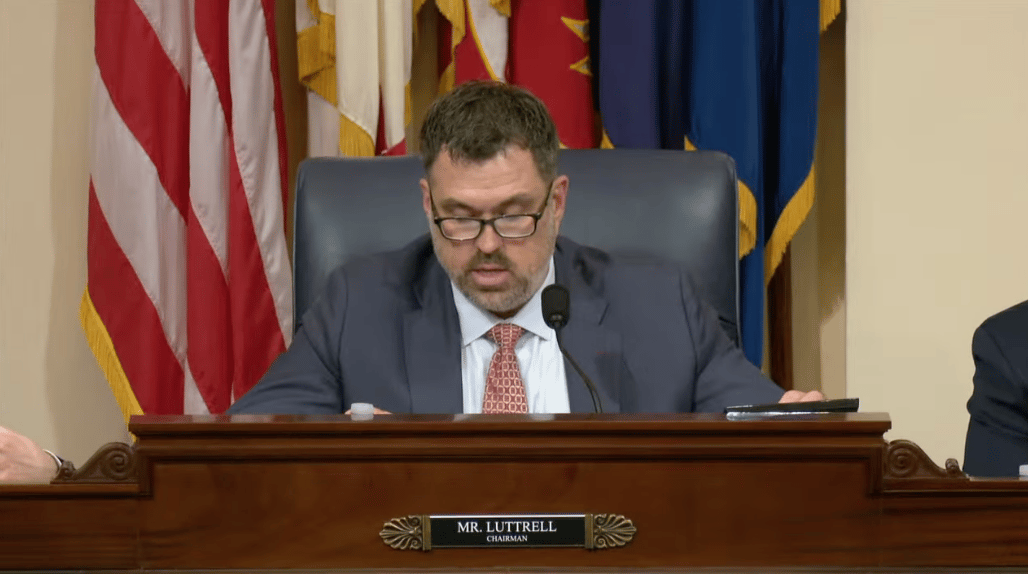
Chairman Morgan Luttrell opened the hearing by emphasizing the importance of modernizing the VA Schedule for Rating Disabilities, noting that it directly affected veterans’ benefits, disability ratings, and financial stability. He explained that while the rating schedule was created in 1945 and partially updated over time, it has not kept pace with modern medical science or economic realities. He expressed concern about the VA’s inconsistent progress, delayed timelines, and the lack of updates to critical systems such as mental health, neurological, and cardiovascular conditions. He concluded that outdated standards undermined fairness, consistency, and veterans’ trust in the system, and stressed that modernization was fundamentally about honoring veterans’ service.
Ranking Member Morgan McGarvey underscored that the disability rating schedule was central to how the nation fulfilled its obligation to veterans. He stated that the system was outdated and overly complex, and argued that modernization should reduce red tape without cutting or undermining earned benefits. He raised concerns about the lack of transparency, data, and publicly available research on how the compensation system was functioning, calling the VA’s modernization efforts a “black box.” He rejected narratives suggesting veterans abused disability compensation, emphasizing that these benefits reflected service and sacrifice and that veterans’ voices, particularly through VSOs, needed to be central to reform efforts.
SUMMARY OF KEY POINTS (PANEL ONE)
Ms. Nina Tann testified that the VA was committed to modernizing the VA Schedule for Rating Disabilities to reflect advancements in medical science, technology, and terminology. She explained that the VA began a comprehensive modernization effort in 2009 after the GAO designated the program as high risk, and that 11 of 15 body systems had been updated to date. Ms. Tann stated that remaining updates were expected to be completed by the end of fiscal year 2026, marking the first holistic update since 1945, and emphasized that changes applied prospectively and did not reduce benefits for already service-connected veterans. She concluded by affirming the VA’s intention to continue iterative updates to promote fairness, consistency, and timely delivery of benefits.
Chairman Luttrell asked whether all 15 body systems under the VA Schedule for Rating Disabilities would be completed by the end of fiscal year 2026. Ms. Tann confirmed that the first holistic and comprehensive review of all body systems would be completed by the end of FY 2026.
Chairman Luttrell then pressed on why the process had taken so long, particularly since 2019. Ms. Tann responded that updates had been occurring incrementally for decades through rulemaking based on evolving medical evidence, but that the full systemic review was complex and resource-intensive.
Chairman Luttrell asked where the VA aggregated its medical data and whether it relied solely on internal sources. Ms. Tann explained that the VA used a combination of internal clinicians and external subject-matter experts who relied on peer-reviewed literature and professional medical associations.
Chairman Luttrell raised concerns about the lack of integration of artificial intelligence and machine learning into the process. Ms. Tann acknowledged that AI and ML had not yet been incorporated but stated the VA was open to exploring those tools in future iterations.
Ranking Member McGarvey questioned how the VA incorporated veteran and VSO feedback prior to drafting proposed rules. Ms. Tann stated that the VA was constrained by the Administrative Procedure Act and primarily relied on the formal notice-and-comment process.
Ranking Member McGarvey criticized this approach as insufficient and urged earlier engagement with veterans. Ms. Tann stated she would identify ways to increase veteran input earlier in the process.
Ranking Member McGarvey asked when the VA’s new earnings-loss study would be completed and whether the underlying data and results would be made public. Ms. Tann responded that contractor-supported work had concluded at the end of FY 2025 and that the VA was evaluating the results as a proof of concept.
Ranking Member McGarvey expressed dissatisfaction with that response and emphasized the need for transparency. Ms. Tann did not commit to public release but said she would take the request back for consideration.
Ranking Member McGarvey asked about the VA’s recent engagement with GAO and whether its methodology had been shared externally. Ms. Tann stated that the VA met regularly with the GAO and had provided updates tied to progress on the High Risk List. She noted that the VA had not shared its methodology with outside researchers. Ranking Member McGarvey argued that an external review could strengthen confidence in the process.
Rep. Jack Bergman asked whether outdated portions of the rating schedule made it harder for the VA to evaluate modern and complex conditions faced by younger veterans. Ms. Tann responded that the VA was removing outdated terminology, subjective criteria, and obsolete testing methods, while adding objective measures and new diagnostic codes. She cited neurological and mental health updates as examples of efforts to reflect current medical understanding. Rep. Bergman stated he did not yet see a sufficient sense of urgency.
Rep. Aumua Amata Radewagen asked how the VA planned to prioritize future updates to the rating schedule after completion of the current iteration. Ms. Tann explained that the VA intended to apply lessons learned, rely on medical evidence and earnings-loss data, and adopt a more strategic project-management approach.
Rep. Radewagen then asked whether a formal project management plan existed for future updates. Ms. Tann stated that such a plan was under development and would include schedules and milestones.
Rep. Keith Self asked whether sleep apnea could be service-connected. Ms. Tann responded that it could be, if it was incurred in, caused by, or aggravated by military service.
Rep. Self questioned how much customization was allowed in disability evaluations. Ms. Tann stated that while free-text was limited, clinical judgment and objective testing were required, and decisions were based on the full evidentiary record.
Rep. Self asked whether more veterans were relying on disability compensation. Ms. Tann said she was not aware of evidence supporting that claim and noted that many veterans receiving benefits were still employed.
Rep. Self asked about the distinction between impairment, disability, and inability to work. Ms. Tann explained that disability ratings reflected functional and occupational impairment and did not necessarily mean unemployability.
Rep. Self then asked how mental health conditions were evaluated under the updated framework. Dr. Sokol responded that the mental health portion of the rating schedule was in the final stages and aligned with DSM-5, emphasizing functional impairment and occupational impact. She stated that the final rule was expected by the end of FY 2026.
Chairman Luttrell questioned whether the VA was relying on outdated mental health data by using DSM-5, which was published in 2013. Dr. Sokol explained that DSM-5 introduced a multidimensional approach to functional impairment that remained the clinical standard.
Rep. Luttrell expressed concern about the age of the data and pressed for firm timelines. Ms. Tann stated that the remaining final rules were anticipated to be published around the summer of 2026, followed by implementation.
SUMMARY OF KEY POINTS (PANEL TWO)
Ms. Elizabeth Curda testified on GAO’s oversight of the VA’s efforts to update the VA Schedule for Rating Disabilities, emphasizing its central role in determining disability compensation for veterans. She explained that GAO designated the VA’s Disability Compensation Program as high risk in 2003 because the rating schedule had not kept pace with advances in medicine, technology, or changes in the labor market since 1945. She noted that while the VA had made progress updating medical criteria for 11 of 15 body systems and begun testing earnings-loss studies, significant gaps remained, particularly in updating earnings-loss data. She warned that without a modernized rating schedule reflecting current conditions, the VA risked overcompensating some veterans while undercompensating others.
Dr. Philip Armour explained that by statute, VA disability compensation was intended to reflect veterans’ average loss of earning capacity, not solely medical impairment. He stated that the VA’s most recent published earnings-loss study relied on outdated data and did not account for modern labor markets, advances in medical treatment, or how VA benefits themselves might influence earnings. He emphasized that disability involved economic and social participation, not just medical diagnosis, and therefore required collaboration between medical and labor experts. He concluded that updated research on today’s veterans was essential to accurately estimate earnings losses or to consider alternative approaches, such as more individualized disability determinations.
Dr. Kyleanne Hunter testified on behalf of Iraq and Afghanistan Veterans of America and stressed that modernization of the VA Schedule for Rating Disabilities should be done with veterans, not merely for them. She highlighted that post-9/11 veterans faced conditions such as traumatic brain injury, toxic exposure, military sexual trauma, and complex mental health disorders that were not adequately reflected in older rating frameworks. She expressed concern about the lack of transparency in the VA’s earnings-loss studies and warned that focusing narrowly on earnings failed to capture quality-of-life impacts and long-term impairments. She concluded that disability compensation served not only as income replacement but also as recognition of the unique risks of military service, which were inseparable from national security and veteran recruitment.
Chairman Luttrell asked whether the VA could realistically modernize compensation levels through the rating schedule or whether delays would persist indefinitely. Dr. Armour said modern earnings-loss studies were feasible and could be done with current methods, but he argued existing approaches were outdated. He stated the work could be completed in months to years rather than decades.
Chairman Luttrell asked whether the VA was positioned to finish by summer 2026. Ms. Curda said she could not guarantee completion by 2026, though she believed the VA was near the final stages before external clearance steps. She added that GAO had not received a progress update since June of the prior year and had not received a substantive action-plan update since August 2024.
Chairman Luttrell asked how the VA would keep the schedule aligned with evolving science after completing the 15 body systems. Dr. Armour said future analyses could be done faster, but that data access remained the main constraint. Ms. Curda said the VA could stay current only with rigorous planning and by reducing internal review bottlenecks that slowed rulemaking.
Ranking Member McGarvey asked what would allow the VA to keep the schedule updated quickly and credibly. Dr. Armour said the key was enabling research through better access to linked data across the Veterans Benefits Administration, the Veterans Health Administration, and the Social Security Administration. Ms. Curda noted the VA had data-sharing agreements in place with the Social Security Administration and the IRS. Dr. Hunter said the lack of transparency remained a major blocker because the VA’s work functioned as a “black box” that limited validation and replication.
Ranking Member McGarvey asked whether VA disability was overly generous and how to respond to claims that veterans gamed the system. Dr. Hunter rejected that premise and said disability compensation reflected a legal and moral obligation tied to military service.
Ranking Member McGarvey asked how “civil occupations” comparisons worked for military jobs without civilian equivalents, and Dr. Hunter said military risks and exposures were not meaningfully comparable to civilian work.
Rep. Bergman asked how silos slowed progress and what Congress could do to increase transparency. Ms. Curda agreed that silos impeded speed and said GAO often faced long clearance delays when requesting information from the VA. Dr. Hunter said breaking the silo between the VA and veterans would reduce lag and improve relevance by incorporating veterans’ real-time experience earlier.
Rep. Kelly Morrison asked how the VA should account for the growing population of women veterans in its data and studies. Dr. Hunter said women needed to be included in both clinical research and earnings-loss analysis, including areas such as reproductive health impacts and musculoskeletal issues.
Rep. Morrison asked how VSOs could support modernization, and Dr. Hunter said VSOs could provide faster feedback, reach veterans outside the VA system, and help build trust.
Rep. Radewagen asked whether the VA treated modernization as a program rather than a one-time project. Ms. Curda said the VA had established a staffed program office and was advancing medical updates and earnings-loss work.
Rep. Radewagen asked about claims-processing impacts, and Ms. Curda said the bigger issue was equity rather than workload.
Rep. Radewagen asked how researchers isolated the impact of a single benefit when veterans used multiple programs, and Dr. Armour said it was difficult without better evidence on program participation and linked outcomes.
Rep. Maxine Dexter asked how to ensure the schedule reflected up-to-date science, and Dr. Armour said updated earnings-loss studies using modern methods were needed for the economic component.
Rep. Dexter asked about research on the Veterans Readiness and Employment program, and Dr. Armour said causal evidence was limited and needed improvement.
Rep. Dexter raised concerns about lowering ratings based on treatment, and Dr. Hunter said it could discourage care, burden rural veterans, and miss ongoing quality-of-life impacts.
Rep. Self asked how much progress had occurred since August 2024, and Ms. Curda said GAO engagement and VA planning improvements had been underway for years, not just since 2024.
Rep. Self asked how Congress could help GAO drive implementation and argued that capacity and demonstrated progress were still lacking.
Rep. Self then asked why Social Security appeared more individualized than the VA, and Dr. Armour said Social Security used a listings pathway and an individualized functional-capacity assessment with stronger data and oversight.
Ranking Member McGarvey asked whether GAO would accept the VA’s methodology and data, and Ms. Curda said yes and asked for faster response times to information requests.
Ranking Member McGarvey asked what research was needed before major reforms, and Dr. Armour said better access to linked data and transparent sharing would allow timely, credible analysis of today’s system.
Chairman Luttrell said data silos and risk-aversion had slowed progress despite the VA’s uniquely valuable datasets. He said outdated standards created inconsistent outcomes and frustration for veterans, and he stated the committee would closely track whether the VA met its summer 2026 timelines.
SPECIAL TOPICS
🖤 Mental Health:
Mental health was repeatedly cited as one of the most outdated and consequential areas of the VA Schedule for Rating Disabilities.
VA witnesses stated that proposed updates to mental health ratings align with DSM-5’s multidimensional functional impairment framework, emphasizing occupational and social functioning rather than diagnosis alone.
Members expressed concern that DSM-5 (published in 2013) may already lag current research, particularly given rapid advances in neuroscience and mental health treatment.
Stakeholders emphasized that mental health conditions often do not immediately remove veterans from the workforce but still impose lifelong functional and quality-of-life impairments that warrant compensation.
🖥️ IT Issues and Electronic Health Record (EHR):
Members repeatedly raised IT modernization failures, using the VA’s electronic health record as an example of federal programs remaining in “final stages” for years.
Concerns centered on bureaucratic delay, excessive internal review layers, and poor execution, not on the technical feasibility itself.
Data silos between VA components were cited as a major IT-related barrier to research, transparency, and timely modernization.
🧠 Traumatic Brain Injury (TBI):
TBI was repeatedly cited as a core condition of the post-9/11 veteran population that was poorly reflected in older rating frameworks.
Members emphasized that understanding of TBI has evolved significantly since earlier conflicts, requiring updated diagnostic criteria and functional assessments.
TBI was discussed alongside mental health conditions as a complex injury with long-term cognitive, emotional, and employment impacts.
♀️ Women Veterans:
Women veterans were identified as the fastest-growing veteran demographic, with projections showing significant growth by 2040.
Witnesses stressed that women have historically been excluded from medical and disability research, leading to inaccurate assessments when male data is generalized.
Key gaps identified included:
Service-connected reproductive health conditions
Different earnings trajectories and labor-force impacts
Underrepresentation in earnings-loss and disability studies
Veteran service organizations argued that failure to incorporate women veterans’ data risks systemic undercompensation and policy blind spots.
JOIN THE NIMITZ NETWORK!
Enjoying our updates? Don’t keep it to yourself — forward this email to friends or colleagues who’d love to stay informed. They can subscribe here to become part of our growing community.