- The Nimitz Report
- Posts
- Quality of Life in the Military
Quality of Life in the Military
Lawmakers and military leaders agreed that improving living conditions and family support is critical to maintaining a ready and resilient force.
⚡NIMITZ NEWS FLASH⚡
“Quality of Life in the Military”
House Appropriations Committee, Military Construction, Veterans Affairs, and Related Agencies Subcommittee Hearing
March 25, 2026 (recording here)
HEARING INFORMATION
Witnesses & Written Testimony (linked):
Sergeant Major Michael R. Weimer: U.S. Army, Sergeant Major of the Army, Department of Army
Master Chief Petty Officer John Perryman: U.S. Navy, Master Chief Petty Officer of the Navy, Department of Navy
Sergeant Major Carlos A. Ruiz: U.S. Marine Corps, Sergeant Major of the Marine Corps, Marine Corps
Chief Master Sergeant David R. Wolfe: U.S. Air Force, Chief Master Sergeant of the Air Force, Department of the Air Force
Chief Master Sergeant John F. Bentivenga: U.S. Space Force, Chief Master Sergeant of the Space Force, Space Force
TOP-LINES TO SHOW YOU ARE IN THE KNOW
Quality of life came up repeatedly as a core readiness issue, with housing, childcare, and family stability directly affecting whether service members can stay focused on the mission.
Members from both parties showed clear frustration with privatized housing, especially the lack of accountability and the difficulty of fixing bad contracts.
While recruiting numbers are improving, service leaders stressed that retention is the bigger challenge and depends heavily on taking care of the force and their families.
Hiring freezes and workforce cuts were flagged as real obstacles that are slowing progress on housing oversight, prevention programs, and other support systems.
There is growing interest in new construction approaches and tools, but leaders made it clear that without steady and predictable funding, the infrastructure backlog will continue to grow.
PARTY LINE PERSPECTIVES
Republicans 🐘 Focused on readiness through strength, highlighting recruiting improvements, the importance of cutting bureaucracy, and the need to modernize infrastructure efficiently while supporting the force. | Democrats 🫏 Discussed the need for sustained investment in housing, childcare, and infrastructure, while raising concerns about privatized housing failures and workforce cuts undermining support for service members. |
OPENING STATEMENTS FROM THE SUBCOMMITTEE
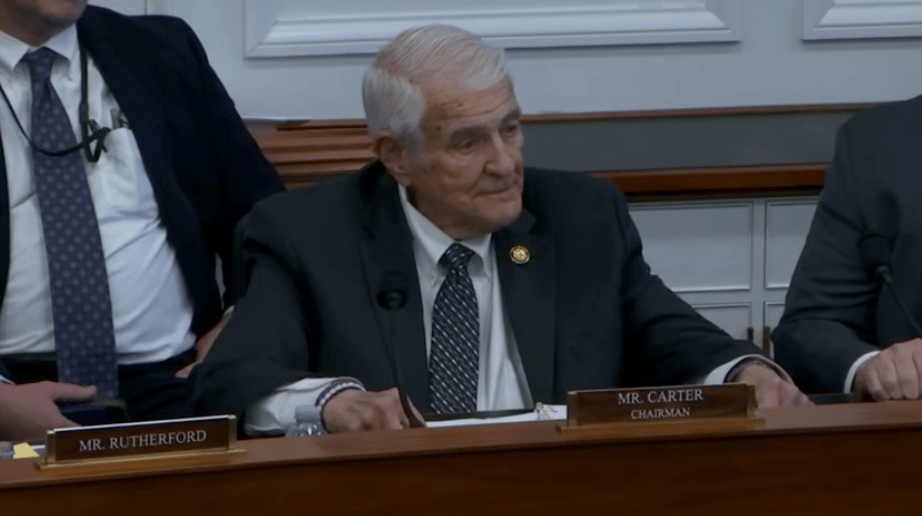
Chairman John Carter spoke on the importance of hearing directly from enlisted leadership about the needs of service members and their families. He stated that the hearing would focus on improving quality of life for enlisted personnel across all branches during a time of active combat operations. He expressed condolences to the families of fallen service members and underscored Congress’s duty to support both troops and their families.
Ranking Member Debbie Wasserman Schultz expressed condolences for recent service member losses and raised concerns about declining quality of life for military personnel. She warned that increased war funding and delayed budgets could undermine long-term investments in housing, healthcare, and infrastructure. She criticized underinvestment, privatized housing issues, and workforce cuts that she argued weakened support systems for service members. She called for a sustained, bipartisan commitment to quality-of-life improvements and efficient use of defense resources.
SUMMARY OF KEY POINTS
Sergeant Major Michael Weimer testified that the Army remains strong, highlighting success in exceeding recruiting and retention goals. He underscored that poor living conditions and infrastructure challenges threaten Soldier readiness and morale. He described efforts to improve barracks, dining, and training while reducing administrative burdens to focus on combat readiness. He also stressed that continued congressional support was essential to sustain quality of life and maintain a lethal, prepared force.
Master Chief Petty Officer John Perryman shared that the Navy maintains a high operational tempo despite a smaller fleet, relying on the resilience of Sailors and their families. He warned that recruiting challenges make retention increasingly critical to sustaining the force. He underlined that quality of life, including housing, childcare, and infrastructure, directly impacts readiness and retention. He concluded that treating quality of service as essential to readiness is necessary to maintain a capable and sustainable Navy.
Sergeant Major Carlos Ruiz emphasized that budget decisions directly affect Marines and their families at the lowest levels. He highlighted the positive impact of recent pay increases but noted ongoing challenges with substandard housing and delayed facility improvements. He argued that funding for facilities and personnel should be viewed as an investment in the future strength of the Marine Corps and society. He stressed that investing in Marines themselves is just as critical as investing in weapons and technology.
Chief Master Sergeant David Wolfe said that Airmen are actively engaged in combat operations and require full focus on their missions. He warned that personal and family concerns, such as housing and healthcare, create dangerous distractions that could undermine readiness. He argued that investment in Airmen and their families is as important as investment in advanced military systems. He underlined that improving quality of life directly strengthens mission effectiveness, resilience, and overall force readiness.
Chief Master Sergeant John Bentivenga stated that investments in pay, housing, and family support are critical to maintaining a strong Space Force. He illustrated the unique challenges Guardians face in balancing demanding missions with family responsibilities. He described ongoing efforts to improve childcare access, spousal employment, and overall family readiness. He claimed that continued investment in quality of life, infrastructure, and force growth is essential to sustaining space superiority and national security.
Chairman Carter asked how the Army was preparing Soldiers and their families for potential large-scale deployments and what investments were needed. SMA Weimer responded that the Army is focused on reducing stressors through increased stability, including longer assignments, improved childcare staffing, and better use of funding for housing and dining improvements.
The Chairman also asked about how often housing allowances were reassessed. SMA Weimer explained that rates were reviewed annually by the Department, with protections in place to prevent reductions for Soldiers already under lease.
Ranking Member Wasserman Schultz questioned how the Navy was using funding for housing oversight and raised concerns about poor conditions and responsiveness in privatized housing, particularly in Key West. MCPON Perryman replied that the Navy planned to use the funds as previously outlined, but acknowledged that hiring freezes and resignations had limited oversight capacity. When pressed, he stated that staffing gaps existed and that he would need to provide additional details for the record regarding hiring approvals and timelines.
Ranking Member Wasserman Schultz asked what actions the Navy was taking to ensure contractors like Balfour Beatty improved responsiveness to families. MCPON Perryman said that Navy leadership, including installation and regional commanders, remained focused on improving housing conditions and oversight. The Ranking Member expressed concern that improvements had been insufficient and advocated for stronger accountability.
Ranking Member Wasserman Schultz then inquired about staffing levels and hiring progress for the Army’s Integrated Prevention Advisory Groups (IPAG) related to sexual assault prevention. SMA Weimer reported that hiring had only reached about 60% due to resignations and hiring freezes, and that the Army was struggling to fill positions across multiple areas. He added that the Army was reevaluating its hiring processes but faced broader workforce challenges affecting oversight and quality-of-life initiatives.
Vice Chair Mark Alford asked what factors contributed to the Army’s improved recruiting and retention outcomes. SMA Weimer responded that success resulted from professionalizing the recruiting force, improving recruiter training and oversight, and streamlining medical processing to reduce delays for applicants. He claimed that reducing wait times for enlistment decisions helped prevent potential recruits from leaving for other opportunities.
Vice Chair Alford then raised concerns about outdated and unsafe facilities at Fort Leonard Wood and asked what the Army was doing to address such infrastructure issues. SMA Weimer said that these facilities were a priority, but that funding constraints and unpredictability limited the Army’s ability to address all needs. He explained that the Army was prioritizing projects using a mission dependency index and exploring cost-saving approaches like pilot programs and alternative funding mechanisms.
Full Committee Ranking Member Rosa DeLauro questioned whether privatized housing models could adequately protect service members compared to government-owned housing. SMA Weimer stated that he was skeptical of large-scale privatization but supported limited pilot programs, such as at Fort Irwin, with strong oversight and voluntary participation. SMMC Ruiz agreed that privatization might work in limited cases but claimed it was not effective at scale and required careful evaluation to avoid continued failures.
Ranking Member DeLauro asked about progress in addressing childcare shortages and what obstacles remained. MCPON Perryman replied that the Navy had reduced waitlists significantly through added capacity and improved staffing, and expected further improvements from upcoming projects. He mentioned that childcare remained a broader national issue and underscored that adequate childcare was essential for recruitment, retention, and overall readiness.
Rep. Scott Franklin asked about the Army’s use of waivers for recruits with prior criminal behavior. SMA Weimer responded that waiver decisions were tightly controlled, with most approvals limited to minor infractions and no approval for serious offenses such as domestic violence or sexual crimes. He explained that each case was evaluated holistically and that oversight had been strengthened within recruiting command.
Rep. Franklin then inquired about raising enlistment age limits and the implications for physical standards and long-term service. SMA Weimer responded that older recruits were often placed in specialized roles and were not always expected to complete full 20-year careers. SMMC Ruiz and CMSSF Bentivenga added that older recruits often brought valuable expertise and discipline, while still being required to meet the same physical standards, and were frequently utilized in reserve or technical roles.
Rep. Sanford Bishop asked whether recent shifts away from DEI-branded efforts had affected equal opportunity protections and reporting systems. SMA Weimer stated that the Army continued to prioritize reporting and investigations and was analyzing data to ensure reporting remained reliable. MCPON Perryman and SMMC Ruiz said that programs remained in place and were still being used without negative impact. CMSAF Wolfe and CMSSF Bentivenga added that they had not observed declines in trust, reporting, or unit climate, and emphasized continued commitment to dignity, respect, and accountability.
Rep. John Rutherford inquired about the status of a deteriorating training facility at NAS Jacksonville and plans for replacement. MCPON Perryman responded that a military construction project existed but had not been prioritized high enough to receive funding due to broader infrastructure backlogs. Rep. Rutherford expressed concern about safety risks and indicated interest in helping elevate the project’s priority.
Rep. Rutherford then asked how investments in facilities contributed to both quality of life and quality of work for Sailors. MCPON Perryman replied that adequate facilities were essential not only for living conditions but also for enabling Sailors to perform their duties effectively. He underlined that poor infrastructure signaled a lack of value for service members and hindered mission performance.
Rep. Veronica Escobar questioned the importance of innovation in military construction, including 3D-printed barracks. SMA Weimer reported that traditional construction methods were insufficient to meet current needs and that innovation was necessary to address infrastructure challenges. He explained that 3D printing showed promise for certain use cases, though it remained limited and required further investment and development.
Rep. Stephanie Bice asked what changes should be made to improve the oversight and effectiveness of privatized housing. CMSAF Wolfe claimed that stronger oversight and accountability were needed, along with better contract structures and flexibility rather than one-size-fits-all solutions. CMSSF Bentivenga mentioned lessons learned from long-term contracts and the need to maximize existing oversight tools to protect service members and their families.
Rep. Bice also asked about the impact of extending parental leave eligibility from one year to two years. MCPON Perryman shared that the change had been beneficial, especially given extended deployments. SMA Weimer added that while most service members used leave within one year, the extended policy provided important flexibility in exceptional or challenging family situations.
Rep. Mike Levin requested a breakdown of the Marine Corps’ Barracks 2030 initiative, including funding needs and progress. SMMC Ruiz said that while progress had been made with new construction and renovations, significant work remained across hundreds of barracks, requiring sustained funding and long-term planning. He added that upcoming efforts would include new barracks, renovations, and improvements such as air conditioning and facility upgrades.
Rep. Levin asked about the number of Marines still living in substandard barracks. SMMC Ruiz responded that only a small number of barracks remained below acceptable standards, with plans in place to relocate affected Marines and eliminate those conditions. He emphasized that leadership aimed to raise all barracks to high-quality standards under the Commandant’s goals.
Rep. Nick LaLota asked about efforts to move junior enlisted Sailors off ships into housing and whether the Pacific Beacon model was effective. MCPON Perryman responded that the Navy had significantly reduced the number of Sailors living aboard ships and that Pacific Beacon had been highly successful, with high satisfaction rates and strong retention appeal. He mentioned that purpose-built housing with proper amenities improved morale and readiness but required sustained maintenance.
Rep. LaLota questioned whether sufficient investment was being made in individual Marines compared to major weapons systems. SMMC Ruiz responded that more investment was still needed in Marines themselves, including equipment, living conditions, and basic needs like reliable infrastructure. He claimed that supporting individual Marines was essential to maintaining an effective fighting force.
Chairman Carter asked how new authorities and alternative construction methods were being used to reduce military construction backlogs. MCPON Perryman replied that the Navy had begun using these authorities to reduce costs and avoid unnecessary requirements, though challenges remained. SMA Weimer added that the Army was piloting innovative approaches like repair-by-replacement and streamlined design processes, but still faced high labor costs and structural inefficiencies.
Ranking Member Wasserman Schultz raised concerns about accountability in privatized housing contracts and asked whether future agreements could be structured to allow enforcement and termination. SMA Weimer shared concerns about long-term contracts and spoke on the importance of stronger contract design and oversight, claiming he would provide additional details.
The Ranking Member also asked about PFAS remediation timelines. CMSAF Wolfe responded that he was not aware of significant delays but agreed to follow up with updated information.
Rep. Rutherford inquired about infrastructure needs and planning for the Space Force’s expansion, including the relocation of STARCOM to Florida. CMSSF Bentivenga elaborated that the Space Force was using a phased approach to expansion, combining MILCON and alternative authorities to build necessary infrastructure. He underscored the importance of community partnerships and flexible construction tools to support growth and mission requirements.
Ranking Member Wasserman Schultz and Chairman Carter reiterated the bipartisan commitment to improving service member quality of life and the importance of addressing housing, infrastructure, and family support to ensure readiness and safety.
SPECIAL TOPICS
🧠 Traumatic Brain Injury (TBI):
Rep. Escobar highlighted concern about service members injured in current operations, particularly those with traumatic brain injuries, and called for long-term care and support for both service members and their families.
📋 Government Contracting:
Members (especially Ranking Member Wasserman Schultz and Full Committee Ranking Member DeLauro) raised concerns about the lack of accountability in long-term (often 50-year) contracts. They also discussed difficulties in terminating or enforcing contracts with underperforming companies, as well as contractors prioritizing profits over service member living conditions.
The witnesses acknowledged oversight gaps and limited control once contracts are signed. They saw the need for stronger contract design, enforcement mechanisms, and oversight authority.
SMA Weimer and others discussed the importance of learning from past failures and applying lessons to new pilot programs (e.g., privatized barracks/apartments).
Regarding broader contracting and construction issues, witnesses also noted excessive internal requirements, the need for alternative contracting authorities and flexible construction methods, and structural inefficiencies in MILCON processes tied to contracting frameworks.
JOIN THE NIMITZ NETWORK!
Enjoying our updates? Don’t keep it to yourself — forward this email to friends or colleagues who’d love to stay informed. They can subscribe here to become part of our growing community.