- The Nimitz Report
- Posts
- The Trillion-Dollar Question
The Trillion-Dollar Question
Can the VA manage its biggest contract ever? Lawmakers argue over the CCN Next Gen contract.
⚡NIMITZ NEWS FLASH⚡
“Community Care Network Next Generation: One Trillion Dollars of Oversight”
House Veterans Affairs Committee Hearing
January 22, 2026 (recording here)
HEARING INFORMATION
Witnesses & Written Testimony (linked) (Panel One):
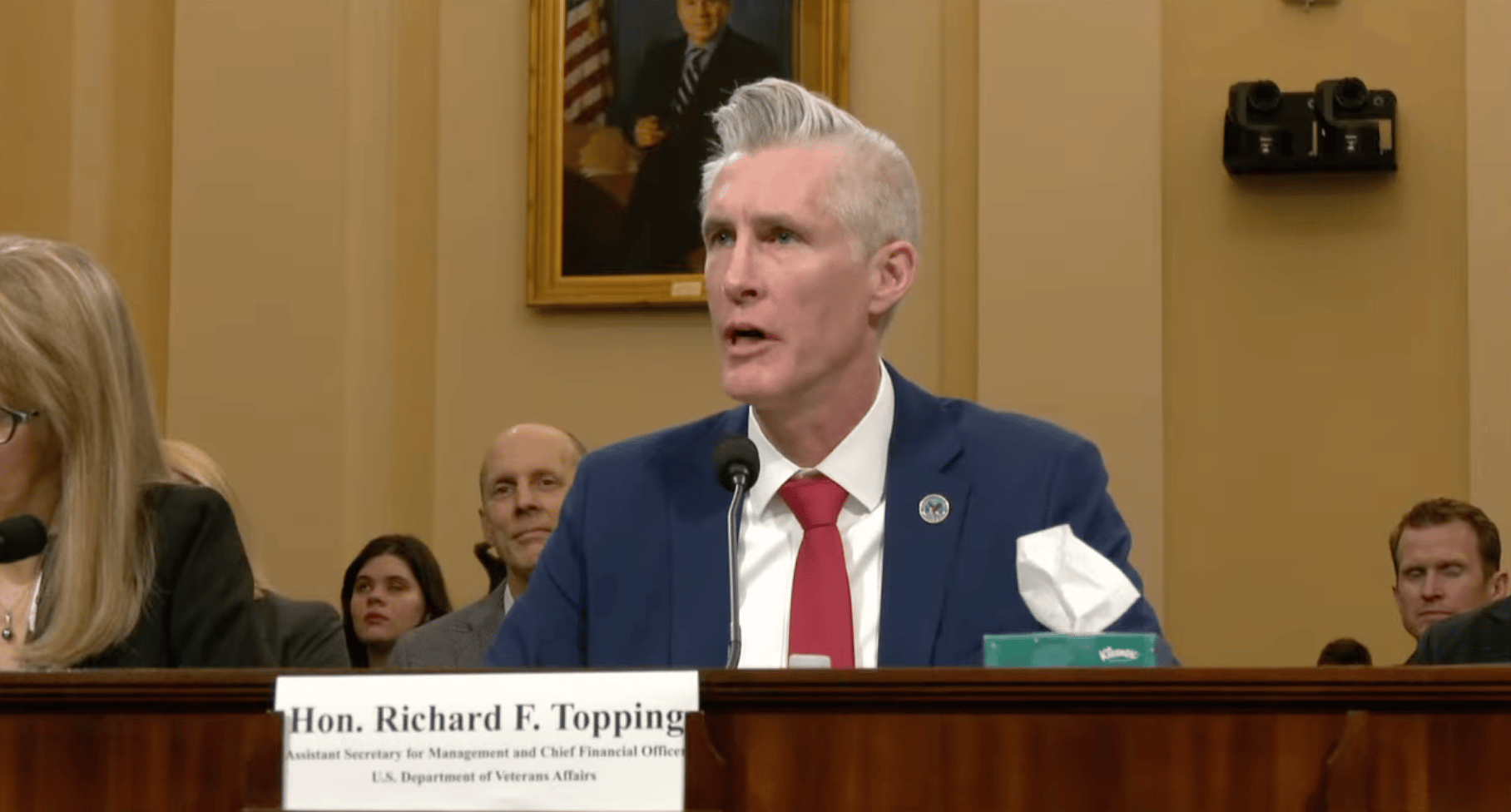
Mr. Richard F. Topping: Assistant Secretary for Management and Chief Financial Officer, U.S. Department of Veterans Affairs
Ms. Alicia Skolrood: Executive Director, Integrated External Networks, Office of Integrated Veteran Care, Veterans Health Administration, U.S. Department of Veterans Affairs
Witnesses & Written Testimony (linked) (Panel Two):
Mr. John Vick: Executive Director, Concerned Veterans for America
Dr. Rachel Madley, Ph.D.: Executive Director, Center for Health and Democracy
Keywords mentioned:
Community Care Network (CCN), Next Generation (Next Gen), IDIQ contract, value-based care, utilization management, program integrity, prior authorization, network adequacy, rural access, staffing cuts, cost containment, quality metrics, care coordination
IN THEIR WORDS
“The $700 billion ceiling on this contract... is equivalent to what President Trump offered Denmark to purchase Greenland... I fear VA’s plans... will put the agency on an unsustainable course, barreling toward privatization, hollowing out direct care.”
“If we don't do our due diligence to maintain and improve community care, we dishonor the memory of the countless veterans who have lingered on secret waitlists at the VA Medical Centers without receiving the care they earned.”
OPENING STATEMENTS FROM THE COMMITTEE
Chairman Mike Bost began by asserting Congress’s constitutional authority over financial matters and their responsibility to oversee the VA. He expressed deep frustration regarding the VA’s failure to submit testimony in a timely manner, claiming that such delays hindered the Committee’s ability to prepare. The Chairman called the Community Care Network (CCN) Next Generation (Next Gen) contract a revolutionary, trillion-dollar initiative designed to maximize healthcare access and choice through competition. He said that while he trusted the leadership involved, the Committee must "trust but verify" to ensure the contract’s execution matches its ambitious vision.
Ranking Member Mark Takano strongly condemned the VA for delivering its testimony less than twenty-four hours before the hearing, calling the delay a sign of disrespect to Congress. He argued that the nearly trillion-dollar contract set the agency on an unsustainable path toward privatization that could hollow out the VA’s direct care system. The Ranking Member then highlighted a significant disparity between the rising costs of community care and the actual number of veterans using those services. He expressed concern that outsourcing oversight to private contractors would lead to waste and abuse while failing to ensure veterans receive culturally competent care.
SUMMARY OF KEY POINTS (PANEL ONE)
Mr. Richard Topping introduced the CCN Next Gen contract as a modernized, competition-driven initiative designed to transition the VA from a volume-based payer to a value-based one. He explained that the contract utilizes an innovative Indefinite Delivery, Indefinite Quantity (IDIQ) model to balance national scale with regional flexibility while focusing on quality, patient outcomes, and program integrity. Through strategies like utilization management and fraud prevention, he projected the framework would save taxpayers between $54 billion and $100 billion over the next decade. Ultimately, Mr. Topping maintained that this procurement would ensure veterans receive high-quality, convenient care while maintaining the long-term sustainability of the VA system.
Chairman Bost inquired about whether the Next Gen contract would resolve billing issues for community ambulance services that struggle to identify veteran status within short claim windows. Mr. Topping clarified that the current claim window is six months and noted that the new procurement is designed to improve eligibility and enrollment verification for emergency providers.
The Chairman also expressed concern that the VA might repeat mistakes made by Medicare. Mr. Topping assured him that the agency has consulted extensively with the Department of Health and Human Services (HHS) to adopt proven "best practices" while avoiding past failures.
Ranking Member Takano questioned the Assistant Secretary regarding the transfer of $2 billion into community care accounts, leading to a tense exchange where Mr. Topping initially denied any transfers in the current fiscal year before clarifying that roughly $1.3 billion had been moved in fiscal year 2025.
The Ranking Member also challenged the VA’s ability to prevent conflicts of interest, specifically questioning how the agency would stop contractors from steering veterans to their own affiliated clinics for profit. While Ms. Alicia Skolrood and Mr. Topping maintained that the VA controls the clinical referral process, Ranking Member Takano dismissed their responses as evasive and criticized the lack of independent enforcement mechanisms.
Rep. Amata Coleman Radewagen asked for a comparison between the first generation of community care contracts and the Next Gen model. Mr. Topping explained that whereas the previous system relied on a limited number of sole-source vendors, the new IDIQ structure allows multiple contractors to compete for specific task orders. He stated that this flexibility allows the VA to "off-ramp" poor performers and evolve the program based on lessons learned over the ten-year performance period.
Rep. Julia Brownley voiced skepticism that the VA could achieve higher quality care with fewer resources, pointing out that community care spending has grown exponentially over the last decade. She questioned whether competition was being used as a substitute for traditional oversight, like prior authorizations. Mr. Topping responded that competition is merely a tool, asserting that the Next Gen contract’s utilization management features would ensure treatments are medically appropriate for a veteran’s specific diagnosis.
Rep. Jack Bergman reflected on the 2018 MISSION Act and asked if the VA had identified specific redundancies or "waste of time and money" since its implementation. Mr. Topping responded that the program had been largely unmanaged since its inception, lacking the controls necessary to drive quality or cost-effectiveness. He explained that the Next Gen contract would provide the tools to manage the program like a sophisticated payer and would correct anomalies that previously made it difficult for industry partners to participate.
Rep. Morgan McGarvey expressed concern that rural veterans in Kentucky would suffer if large national insurers bypassed less profitable rural providers in favor of their own vertically integrated networks. Mr. Topping assured him that the VA, not the insurance companies, would retain control over clinical referrals and eligibility determinations to prevent profit-driven "steering." He underscored that the IDIQ contract structure allowed the VA to off-ramp national companies that failed to provide adequate coverage and instead bring in local Kentucky providers. Rep. McGarvey remained skeptical, saying that private insurers are motivated by profit rather than the moral promise made to veterans.
Rep. Derrick Van Orden criticized the VA for the late submission of testimony and shared personal experiences of the bureaucracy "slow-rolling" community care through travel-time impediments. He asked for the average wait time for community care, and Mr. Topping admitted that while some veterans were seen in four days, others waited as long as 54 days. The witness stated that Secretary Collins had introduced a "best medical interest" standard to allow providers and veterans, rather than bureaucrats, to decide when community care is appropriate. Rep. Van Orden demanded a follow-up on the percentage of veterans pushed into the 50-day wait window and vowed to hold the administration accountable regardless of political affiliation.
Rep. Delia Ramirez questioned how the VA intended to oversee a complex trillion-dollar contract while simultaneously reducing its workforce by thousands of positions. She cited a GAO report showing that the office responsible for contract oversight was only staffed at 50% of its authorized level. Mr. Topping disputed the reported staffing cut figures and claimed the VA was actively working to fill clinical vacancies. However, when pressed for the specific number of positions authorized for Next Gen oversight, he admitted he did not have a number yet because the program management team was still being designed.
Rep. Keith Self voiced concerns that the IDIQ model might lead to a "race to the bottom" or favor only the largest vendors. Mr. Topping countered that the model was intentionally designed to increase competition by giving smaller regional health plans a "seat at the table" with the VA. He explained that the VA would have the power to off-ramp underperforming vendors through a specific oversight process managed at the agency leadership level. Rep. Self warned that as community care approaches 50% of total VA care, arguments regarding privatization would intensify, and he asked for a ten-year vision of success for the program.
Rep. Maxine Dexter’s line of questioning focused on which other healthcare organizations used the IDIQ structure and how the VA would evaluate alternative payment models offered outside the direct care system. Mr. Topping clarified that while the IDIQ model was common in government, its application to a major healthcare contract was a first for the VA. He explained that although vendors would propose regional models based on their expertise, the VA would ultimately decide which models to implement.
Rep. Tom Barrett recalled the origins of community care, noting that post-9/11 needs required a shift away from a system that forced veterans to travel hours for basic services like physical therapy. He questioned whether the Next Gen contract would finally solve the inability of the VA and community providers to share electronic health records and diagnostic images. Mr. Topping confirmed that the new contract requires the use of commercially available, compatible systems that can bridge the gap between the VA’s legacy systems and modern provider networks. He claimed that this integration would reduce redundant testing and ensure that the veteran’s medical history follows them seamlessly across different care settings.
Rep. Tim Kennedy argued that shifting care into a fragmented private system risks the holistic, specialized treatment that the VA was uniquely built to provide. He challenged the witness on the lack of specific clinical quality metrics within the RFP, suggesting that contractors are essentially being asked to "police themselves." Mr. Topping countered that the contract incorporates industry-standard HEDIS scores and mandatory quality requirements that the VA will actively manage through its program office. He underlined that the VA remains the primary owner of the veteran’s care and maintains the authority to off-ramp any vendor that fails to meet these defined standards.
Rep. Sheila Cherfilus-McCormick raised concerns about the VA’s history of failed technology implementations and questioned the specific acquisition framework used for Next Gen. She asked whether the VA had already passed key "acquisition decision events" and who was involved in those high-level choices. Ms. Skolrood confirmed that the VA followed its standard acquisition life-cycle framework and is currently coordinating an implementation team of over 200 members. Rep. Cherfilus-McCormick warned that "building the plane while flying it" has historically led to failure at the VA and demanded detailed reporting on implementation safeguards.
Rep. Kelly Morrison focused on the use of incentives and disincentives within the contract, specifically questioning why "adverse credit reporting" was listed as a primary performance objective. Mr. Topping explained that ensuring veterans are not improperly billed and sent to collections is a vital proxy for a contractor’s ability to manage claims accurately. He also noted that the VA is starting with well-known bundled payment models, such as lower extremity joint replacements, to ensure the initial oversight is effective. The VA committed to working with the committee to ensure these incentives do not become a mechanism for insurance companies to extract excessive taxpayer funds.
Rep. Nikki Budzinski inquired about the technology required to facilitate the return of medical documentation to the VA, saying that current manual processes are time-consuming and prone to failure. Mr. Topping admitted that the current manual retrieval is "unacceptable" but claimed the new contract mandates electronic data exchanges consistent with the rest of the healthcare industry. While payment to vendors is not directly tied to the return of records, the witness explained that contractors are responsible for ensuring provider compliance. He added that providers who consistently fail to return records would lose their status as "preferred providers" within the network.
Rep. Self pressed for a guarantee that the $1 trillion price tag would be the final cost, given the VA's history of requesting supplemental funding. Mr. Topping argued that previous budget inaccuracies stemmed from an "unmanaged" system, but Next Gen provides the tools to control costs for the first time. He projected that these tools, based on verified CMS data, would save the taxpayer up to $100 billion over the life of the contract. He also said that while the program follows regional boundaries, the IDIQ structure provides the flexibility to cross those boundaries to meet specific veteran needs.
Ranking Member Takano expressed deep concern that the "vertical integration" of insurance companies would lead to contractors steering veterans toward their own clinics for profit. He pointed out that VA schedulers currently lack visibility into which providers are owned by the third-party administrators (TPAs), creating a significant conflict of interest. Furthermore, he criticized the fact that suicide prevention training for community providers remains voluntary because TPAs claim mandatory training hinders recruitment. Mr. Topping acknowledged the risk but insisted that under Next Gen, the VA would have more authority to mandate specific training and control patient steerage.
SUMMARY OF KEY POINTS (PANEL TWO)
Mr. John Vick testified that the VA should prioritize veteran agency by ensuring they have the choice to seek care at either a VA facility or a community provider. He highlighted that current wait times for specialized services like oncology and dental care at VA medical centers often far exceed community standards, creating a dire need for external options. While he expressed support for the Next Gen contract as a means to sustain healthcare choice, he urged Congress to manage the investment strictly to prevent waste and fraud. Mr. Vick ended his remarks by claiming that expanding community care is not an attempt to privatize the VA, but rather a way to make the agency a better partner to those it serves.
Dr. Rachel Madley argued that the shift toward private-sector care through the Next Gen initiative is based on the flawed assumption that private contractors prioritize veterans over corporate profits. She cited findings that current contractors have significantly overbilled the VA for services while failing to maintain adequate provider networks or demonstrate military cultural competency. Dr. Madley warned that importing Medicare Advantage-style payment models would likely lead to care rationing and "upcoding," which could harm patient outcomes and inflate taxpayer costs. She recommended that the VA reinvest the proposed trillions into its own infrastructure and staff rather than expanding reliance on profit-driven intermediaries.
Chairman Bost asked how the VA could better incorporate veteran input into major contract decisions like Next Gen. Mr. Vick pointed to 2022 survey data showing that 83% of veterans were satisfied with community care compared to lower satisfaction rates for direct VA care. He suggested that true accountability should be measured by patient outcomes rather than just spending figures. Mr. Vick further argued that the VA should expand the pool of available doctors to mirror the private health infrastructure, which would allow veterans to see the same local providers as their families.
Ranking Member Takano questioned Dr. Madley about specific risks in the Next Gen RFP that could lead to the misuse of taxpayer funds. Dr. Madley testified that the contract imports a Medicare Advantage model where private contractors keep 50% of any savings they generate, which she argued creates a direct incentive to deny or ration care.
The hearing grew contentious when the Ranking Member questioned Mr. Vick about his organization’s donors and its affiliation with Americans for Prosperity. Mr. Vick declined to provide a donor list, stating that he focuses on grassroots advocacy for thousands of volunteers rather than donor development.
Rep. Brownley questioned Mr. Vick on whether his organization, Concerned Veterans for America, truly represents the views of all veterans or if it primarily serves a specific political agenda. Mr. Vick responded that while points of view differ, he is passionate about healthcare choice as a matter of human dignity and wants to make the VA a better partner for veterans.
When asked by Rep. Brownley, Dr. Madley highlighted that under the new contract, there are no guardrails to prevent "vertical integration" self-dealing. She said that companies like UnitedHealth Group have historically paid their own providers significantly higher rates than non-affiliated ones, a practice she feared would continue under the new VA contract.
Rep. Dexter responded to the wait-time data by claiming that staffing shortages at VA facilities, including the loss of administrative schedulers, have made it difficult for doctors to fill available appointment slots. She pushed back against the idea that veterans always prefer community care, stating that many patients she treated would rather drive long distances or wait to see a direct VA provider. She expressed skepticism toward private contractors' promises, citing over $900 million in dental overpayments as evidence of misaligned fiduciary responsibilities. Rep. Dexter then suggested that it is unrealistic to expect community providers to reach the same level of military-specific expertise as VA staff, particularly regarding toxic exposures and service-connected joint issues.
Rep. Dexter turned to Dr. Madley, who confirmed that the overpayments to dental providers occurred because existing contracts lacked specific prohibitive language, allowing contractors to prioritize shareholder profits over efficient taxpayer spending. She recommended that the VA mandate more accurate network data and clearly label which community providers have completed specific training in suicide prevention and opioid prescribing. Dr. Madley warned that without such transparency, the VA would continue to struggle with "ghost networks" where listed providers are not actually accepting veteran patients. She reiterated that relying on private contractors to oversee other contractors is a flawed management strategy that lacks the necessary verify-and-verify mechanisms.
Chairman Bost concluded the hearing by reinforcing the Committee’s commitment to "trust but verify" the VA’s trillion-dollar transition. He emphasized that the primary goal remains helping veterans realize the best possible benefits in the most convenient locations.
SPECIAL TOPICS
🖤 Mental Health & Suicide Prevention:
Mr. Vick noted that while mental health wait times in DC are relatively short (8 days), they are significantly longer elsewhere: 26 days in Baltimore, 39 days in Phoenix, and 55 days in Los Angeles. He warned that veterans needing urgent mental health care often cannot survive such long waits.
Ranking Member Takano expressed significant frustration that suicide prevention training for CCN providers is currently voluntary. He stated that TPAs have historically resisted making this mandatory to avoid limiting their ability to recruit providers.
Mr. Topping said that under the new Next Gen contract, the VA will have the authority to mandate specific trainings, including suicide prevention, though he acknowledged the risk that such mandates could impact the size of the provider network.
Mr. Topping also explained that Utilization Management (UM) would ensure mental health treatments (like therapy or medication for PTSD) are appropriate for the diagnosis and not substituted for irrelevant procedures.
🖥️ IT Issues:
Multiple Committee members highlighted the failure of current systems to share basic records, such as X-rays, between the VA and community providers. Mr. Topping admitted the current process is often manual and "unacceptable."
According to the VA, the Next Gen contract will require contractors to use commercially available electronic exchanges to share records, moving away from manual faxing and phone calls.
Mr. Topping claimed that while the VA transitions from the 30-year-old VISTA system to the new Oracle Health EHR, the community care technology will serve as a bridge to ensure data flows electronically regardless of the VA's internal system status.
When asked if payment should be tied to the return of medical records, Mr. Topping clarified that while payment isn't directly linked, providers who fail to return records may lose their "High Performing Provider" designation.
📋 Government Contracting:
Mr. Topping described the Next Gen contract’s Multiple-Award DIQ structure. This allows the VA to off-ramp poor-performing contractors and on-ramp regional ones to increase competition and flexibility over 10 years.
The contract is estimated to cost up to $1 trillion over a decade. Chairman Bost and Ranking Member Takano both expressed serious concern regarding the oversight of such a massive sum.
The VA plans to move from "volume-based" (paying for every bill) to "value-based" (paying for health outcomes). Dr. Madley warned that this Medicare Advantage-style model allows contractors to keep 50% of savings, potentially incentivizing them to deny necessary care.
Ranking Member Takano and Rep. Ramirez criticized the idea of hiring contractors to oversee other contractors, calling it a recipe for "waste, fraud, and abuse."
♀️ Women Veterans:
Mr. Vick pointed out that new patient wait times for OBGYN treatment at the Washington VA Medical Center were approximately 66 days as of January 2026.
JOIN THE NIMITZ NETWORK!
Enjoying our updates? Don’t keep it to yourself — forward this email to friends or colleagues who’d love to stay informed. They can subscribe here to become part of our growing community.