- The Nimitz Report
- Posts
- "The Risk Was Doing Nothing": VA's Plan to RISE
"The Risk Was Doing Nothing": VA's Plan to RISE
Lawmakers pressed VA leaders on whether sweeping reorganization will finally deliver better care, or create new risks, for veterans.
⚡NIMITZ NEWS FLASH⚡
“Building a 21st Century VA Health Care System: Assessing Efforts to Restructure the Veterans Health Administration”
Senate Veterans Affairs Committee Hearing
January 28, 2026 (recording here)
HEARING INFORMATION
Witnesses & Written Testimony (linked):
The Honorable Douglas A. Collins: Secretary of Veterans Affairs
The Honorable John Bartrum: Under Secretary for Health, U.S. Department of Veterans Affairs
Mr. Mark Engelbaum: Assistant Secretary for Human Resources and Administration, U.S. Department of Veterans Affairs
Mr. Gregory Goins: Acting Chief Operating Officer, Veterans Health Administration, U.S. Department of Veterans Affairs
Keywords mentioned:
Reorganization, HSA model, VISN consolidation, integrated care, community care, contract cancellations, risk assessment, KPI metrics, rural hospitals
IN THEIR WORDS
“If this is chaos, then maybe we’re going in the right direction.”
“Nothing pains me more than fixing a problem for one veteran knowing it could happen to someone else tomorrow.”
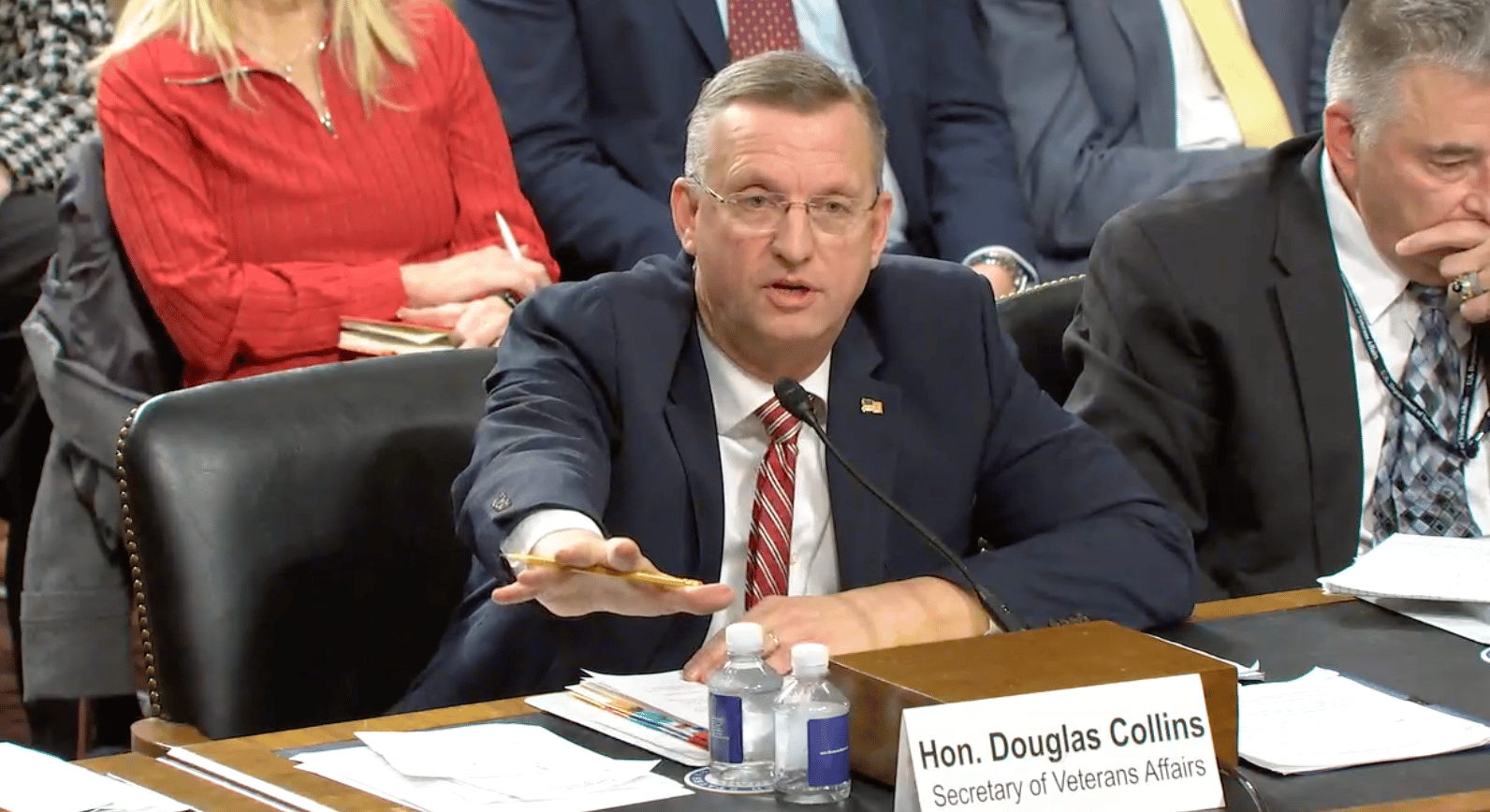
OPENING STATEMENTS FROM THE COMMITTEE
Chairman Jerry Moran announced that this hearing was the first of two planned sessions examining the VA’s proposal to modernize the VA Health Care System, specifically through the restructuring of the Veterans Health Administration (VHA) through the Restructure for Impact and Sustainability Effort (RISE) initiative. He explained that the reorganization was intended to reduce bureaucracy, strengthen accountability, empower local leaders, and improve care quality and access for veterans. He cited longstanding findings from the Government Accountability Office (GAO) and the VA Office of Inspector General (OIG) that identified structural deficiencies the plan aimed to address. The Chairman sought to understand how risks would be mitigated during implementation and expressed interest in hearing how the VA would engage stakeholders and ensure lasting improvements.
Ranking Member Richard Blumenthal welcomed the witnesses and honored the memory of Alex Pretti, a VA nurse whose death he described in detail and linked to broader concerns about accountability and public service. He supported efforts to reduce bureaucracy and improve veteran care but raised concerns about the potential negative effects of the VA’s reorganization on frontline staff and critical administrative functions. The Ranking Member criticized the VA for insufficient communication and responsiveness to congressional inquiries and requests for information. He expressed hope that the hearing marked a new chapter of transparency, accountability, and constructive engagement between the VA and Congress.
SUMMARY OF KEY POINTS
Sec. Doug Collins expressed appreciation for the tone of the hearing and conveyed condolences to the family and colleagues of Alex Pretti, while noting that the matter remained under investigation and was not being handled by the VA. He claimed that the proposed departmental restructuring was not a reduction in force and was intended to eliminate excessive administrative overhead while redirecting resources toward direct veteran care. Sec. Collins explained that the plan was informed by decades of GAO and IG reports, congressional feedback, stakeholder input, and firsthand observations from visits to VA facilities nationwide. He asserted that the reorganization would improve health care quality, clarify lines of authority, empower local leadership, and represent a generational reform of the VHA.
Chairman Moran asked whether the VA’s proposed reorganization would address longstanding problems where individual veteran cases were resolved without fixing underlying policy failures or reaching frontline staff. Sec. Collins responded that the Chairman had accurately described the core reason for the reorganization and said that internal silos and fragmented policy implementation had prevented systemic solutions. Mr. Gregory Goins further explained that inconsistent guidance across program offices and Veterans Integrated Service Networks (VISNs) often resulted in conflicting answers for frontline workers. He stated that the new Medical Operations Center would standardize policy interpretation and ensure consistent communication to the field. The redesigned structure would also allow issues affecting individual veterans to be flagged and corrected systemwide in real time.
The Chairman then questioned how consolidating the VISNs from 18 to 5 would meaningfully improve oversight, accountability, and outcomes, and he asked what benchmarks would be used to measure success. Sec. Collins replied that the existing VISN structure lacked effective authority and had failed to act on known problems, citing examples where oversight gaps persisted. Under Sec. John Bartrum elaborated, saying that the new model would narrow VISN directors’ scope to executive oversight and strategy, while newly created Health Service Area leaders (HSAs) would focus on day-to-day support for hospitals and local markets.
Mr. Goins added that the redesign would reduce competing responsibilities for VISN directors and allow HSAs to work directly with facility directors and community stakeholders to resolve issues more quickly. Under Sec. Bartrum further clarified that the reorganization would streamline reporting so that VISN directors would report directly to him, which he said would reduce bureaucracy and improve visibility into field operations. He believed that this tighter reporting structure would allow faster identification and resolution of problems across facilities.
Ranking Member Blumenthal asked how an additional $6 billion appropriated for VA health care in fiscal year 2025 had been spent, expressing concern that the funds were used to cover costs associated with staff reductions rather than expanding care capacity. Sec. Collins responded that the VA would provide a full accounting and indicated that the funds were not used to push employees out. The Ranking Member pressed for workforce data, referencing reports that more than 40,000 employees had left the VA, and requested a facility-by-facility breakdown of staffing losses and vacancies. Sec. Collins and Mr. Mark Engelbaum pledged that the VA would provide detailed workforce numbers, clarifying that approximately 30,000 positions had been reduced, while total losses reflected broader workforce movement.
Ranking Member Blumenthal also questioned why the VA’s annual veteran suicide data report was overdue and asked whether the legislative affairs office had issued a non-concurrence. Sec. Collins was unaware of a non-concurrence and said the report was in its final stages and would be released soon. The Ranking Member underscored the urgency of the report and asked for detailed mental health care wait-time data across VA facilities. Sec. Collins stated that national averages showed wait times of 18.8 days for new mental health patients and 5.8 days for established patients, and he committed to providing facility-level data. Ranking Member Blumenthal noted that his information showed significantly longer wait times in many states and requested the detailed data for verification.
Sen. John Boozman asked what protections the VA implemented to ensure continuity of care during the RISE process and underlined that veterans’ access to care must remain unaffected. Sec. Collins agreed that the reorganization was intended to improve care rather than disrupt it and cited examples where the VA reduced bureaucratic barriers, including faster pathways to community care and direct access improvements for women’s health services. Under Sec. Bartrum reiterated that the reorganization was concentrated at the policy and VISN levels to improve information flow and standardization without interfering with frontline execution. Mr. Goins added that frontline clinicians and facility leaders had been involved from the beginning and said that the VA intended to keep direct care protected by continuously incorporating frontline input into implementation decisions.
Sen. Boozman then asked whether the VA had the necessary funding authorities to execute RISE or would need additional support. Sec. Collins confirmed that the VA had the necessary authorities and was planning against the fiscal year 2026 budget allocations while appreciating appropriations discussions and prior coordination with congressional leadership.
Sen. Patty Murray began by condemning the killing of VA nurse Alex Pretti and criticizing federal actions and subsequent messaging about the incident, while calling for an independent investigation and accountability. She then asked whether Minneapolis VA employees were being allowed time off or support to mourn, given staffing shortages and mandatory overtime constraints. Mr. Goins replied that leadership had engaged with the medical center daily since the incident, that employee assistance resources had been offered, that leave requests were handled with empathy, and that a memorial service had occurred with significant employee attendance.
Sen. Murray then reported that a near-total abortion ban had been implemented at the VA and asked Sec. Collins directly whether a veteran who had been raped could receive abortion care at the VA under current policy. Sec. Collins responded that abortions were not provided at VA medical centers except in life-threatening circumstances for the mother and argued that prior policy changes had altered longstanding practice. Sen. Murray characterized that outcome as unacceptable; Sec. Collins asserted that he viewed the matter differently from Sen. Murray.
Sen. Tommy Tuberville cited a staffing-versus-workload comparison and asked whether the VA had been overhired and was rebalancing resources to prioritize veterans. Sec. Collins agreed and described examples in which employee growth outpaced patient encounter growth. Mr. Engelbaum shared that the VA delivered strong care but had not done so cost-effectively and argued that adding staff without improving operational efficiency had increased bureaucracy and slowed support for veterans. Mr. Goins added that the VA lacked a direct workload-to-resourcing connection, described resource allocation as a “wish list” disconnected from demand, and said that overstaffing limited the VA’s ability to shift resources toward growing areas when opening new clinics.
Sen. Tuberville asked how community care fit into the reorganization and also urged more domestically made drugs for veterans. Sec. Collins replied that community care was required by law and needed to be balanced across states, and he asserted that community-provider availability could affect wait times. He referenced new community care contracting efforts and said the administration had examined supply chains to support more American-made products. Mr. Goins also said that the new HSA structure was intended to improve real-time engagement with community partners and correct coordination issues between VA and non-VA providers.
Sen. Mazie Hirono challenged the VA’s decision not to provide abortion services for rape or incest and argued that it reflected ideology rather than legal necessity. She asked who had been conducting the investigation into Alex Pretti's death and pressed Sec. Collins on whether he supported an independent investigation. Sec. Collins maintained that the VA was not conducting the investigation and said the Senator would need to consult DHS and other agencies.
Sen. Hirono questioned whether RISE aligned with Project 2025 principles and claimed the plan appeared top-down and restrictive for local facilities. Sec. Collins denied that he had followed Project 2025, claimed he had not read it, and said he focused on running the VA for current needs. He rejected the statement that RISE was a top-down approach and held that the plan was meant to restore flexibility to facility leadership and empower hospital directors. Sen. Hirono remained skeptical and argued that implementation would determine outcomes. Sec. Collins countered by citing reduced backlogs and lower wait times, arguing that those outcomes showed progress rather than dysfunction.
Sen. Kevin Cramer jokingly challenged Sec. Collins and expressed skepticism that the VA could have reduced a backlog from roughly 264,000 to about 105,000 in a single year without an error. Sec. Collins responded that there had been no mistake and that VBA staff had driven the improvement after leadership pressed for better performance. He shared that the total claims pipeline had also been reduced from over one million to roughly 550,000–600,000. Sec. Collins also added that average days to complete claims had fallen from about 135 days to about 80 days, with the VA aiming for substantially faster turnaround if Department of Defense (DOD) file transfers improved.
Sen. Cramer then argued that staffing reductions and the opening of new clinics seemed inconsistent and asked how the VA had opened approximately 25 clinics since early 2025 while also reducing staff and backlogs. Sec. Collins responded that the VA had continued expanding access, reflecting progress rather than disorder. Sen. Cramer highlighted rural distance challenges, referenced new clinics in Williston and Grand Forks, and promoted legislation to better integrate critical access hospitals to improve rural veteran access. Sec. Collins supported partnering with rural hospitals and cited prior discussions about co-location concepts, while Under Sec. Bartrum reported that he had begun reviewing restrictions on leasing and partnerships.
Sen. Maggie Hassan asked when the VA would make public the overdue action plan required by a presidential executive order regarding a full-service VA hospital in New Hampshire. Sec. Collins stated that he wanted the action plan released as soon as possible, but it was still being finalized and had been delayed by a shutdown-related setback.
Sen. Hassan then raised concerns about reports that the VA planned to permanently eliminate up to 35,000 positions, and asked what analysis the VA had conducted to ensure these eliminations would not harm veteran care now or in the future. Mr. Engelbaum responded that personnel levels should not be conflated with authorizations. He expanded on the VA’s work to build a staffing structure process long requested by Congress, while asserting that many vacant billets lacked funding and had lingered on the books for years.
Sen. Hassan also pressed on reports that the VA was imposing “caps” on VISN hiring and asked whether Sec. Collins would commit to hiring staff needed for expanded services, including a potential New Hampshire hospital. Mr. Goins responded that the VA needed an enterprise resource allocation strategy and argued that bottom-up evaluation was necessary alongside affordability planning. Sen. Hassan stated that the strategy differed from arbitrary top-down caps and said the VA had a trust deficit because earlier workforce and contract actions lacked transparent process explanations. Mr. Engelbaum clarified that what had been described as “caps” reflected an initial unit-manning approach, where requirements identified by operators were adjusted for expected vacancy rates and then used as an authorized staffing baseline rather than an arbitrary ceiling.
Sen. Dan Sullivan emphasized that community care was vital for Alaska and other states without a full-service VA hospital. He asked how the reorganization would maintain and prioritize community care and criticized prior incentives that discouraged referrals outside the VA system. Sec. Collins responded that community care would be enhanced through the HSA structure and through contracting changes that expanded third-party networks. Under Sec. Bartrum confirmed that there were no plans to reduce community care.
Sen. Sullivan then expressed skepticism about VISN realignments based on Alaska’s past experience and requested continued engagement on making Alaska a separate VISN or ensuring Alaska had a dedicated HSA rather than being grouped with a state like Hawaii. Sec. Collins pledged to continue working with Sen. Sullivan to find a solution and indicated that the hearing itself reflected the VA’s willingness to engage.
Sen. Ruben Gallego raised concerns about a planned VA medical facility in Yuma, Arizona, scheduled to open in 2027. He worried that due to reported staffing caps, the new facility would be unable to hire new staff and would have to pull employees from already understaffed hospitals, which he argued would undermine care in a growing rural region. Sec. Collins responded that Arizona’s rapid growth was one of the reasons the VA pursued reorganization. Mr. Goins added that the VA had historically failed to align staffing with demand and said the new approach aimed to reallocate resources across the system rather than forcing local facilities to “rob Peter to pay Paul.”
Sen. Gallego pressed on the issue of timeliness, warning that bureaucratic delays could leave new facilities understaffed when they opened. He cited Arizona mental health wait times averaging 51 days for new patients and argued that delays posed serious suicide-prevention risks. Sec. Collins reported that the national average for new mental health patients was approximately 18.8 days and that higher-growth markets often experienced longer waits, committing to follow up with Arizona-specific data. He added that if facilities identified urgent clinical needs, leadership could intervene to ensure necessary staffing. Sen. Gallego warned that recruitment challenges in Yuma required proactive action rather than reactive fixes.
Sen. Tim Sheehy shifted the discussion to electronic health record (EHR) modernization and claimed that prior efforts had been an “unmitigated disaster” spanning multiple administrations. Sec. Collins explained that the VA had moved toward standardizing roughly 90 percent of the system, limiting customization. He confirmed new deployments were underway in Michigan, Ohio, Alaska, Indiana, and other sites with improved metrics and oversight. Sec. Collins stated that, for the first time, the VA had a viable plan to implement an interoperable system that supported community care and internal coordination, and he offered access to Under Secretary Paul Lawrence for further briefings.
Sen. Elissa Slotkin raised bipartisan concerns about Michigan’s upcoming EHR rollout, citing staffing shortages, accelerated deployment schedules, and incomplete implementation of IG recommendations. She requested that Dr. Lawrence brief Michigan’s bipartisan congressional delegation. Sec. Collins agreed to schedule the briefing and stated that earlier IG findings were based on a flawed system that was no longer in place. Sen. Slotkin then questioned Sec. Collins about his public statements regarding Alex Pretti’s death, arguing that he had prejudged the incident and failed to adequately defend his employee against public accusations. Sec. Collins reiterated that the death was a tragedy and affirmed that neither he nor senior leadership prevented a memorial service, attributing conflicting messages to local leadership in Minneapolis.
Sen. Jim Banks asked how the integrated care model would benefit Indiana veterans. Sec. Collins responded that combining direct care and community care was central to improving outcomes. Mr. Goins explained that the new HSA structure would allow leaders to focus specifically on Indiana’s needs rather than being consumed by broader VISN oversight responsibilities.
Sen. Banks also asked whether any obstacles existed to including the outpatient center lease in the FY 2027 budget. Sec. Collins did not see any obstacles from the VA’s perspective and believed that final decisions rested with Congress. Sen. Banks then questioned how consolidating VISNs would improve care coordination in Indiana, which currently spans multiple VISNs. Mr. Goins and Under Sec. Bartrum explained that larger VISNs would focus on strategy and resource allocation while HSAs would manage market-level coordination, allowing veterans to continue choosing care locations while providing clearer accountability and escalation pathways for resolving issues.
Sen. Angus King asked whether the VA reorganization was finalized or still a draft. Sec. Collins responded that the overall structure and vision were moving forward toward implementation, while acknowledging that smaller adjustments were still being made based on feedback from staff and members of Congress. Sen. King expressed skepticism that the plan truly flattened the organization, arguing that reducing VISNs while adding HSAs appeared to insert a new layer. Sec. Collins and Mr. Goins replied that VISNs had grown far beyond their original intent and that HSAs were designed to specialize in support and oversight, allowing VISN leaders to focus on governance while improving facility-level responsiveness.
Sen. King then raised concerns about the VA’s handling of contract cancellations, stating that repeatedly provided lists were inaccurate, overstated totals, and included contracts canceled under prior administrations. He requested a clean, corrected list identifying which contracts were canceled, their purpose, and associated dollar amounts. Sec. Collins affirmed that the VA would work to address the concerns and follow up. Sen. King also asked whether functions such as tribal health, women’s health, chaplain services, research, readjustment counseling, and patient advocacy had been eliminated because they no longer appeared on the organizational chart. Sec. Collins confirmed that those functions would continue under the new structure.
Sen. Tammy Duckworth asked for assistance advancing legislation to allow the co-location of community-based outpatient clinics with rural hospitals and requested a point of contact for technical assistance. Sec. Collins identified a senior official to coordinate with her staff. Sen. Duckworth also requested a white paper detailing the development and analysis behind the VHA reorganization plan, claiming she had not yet received it despite earlier assurances. Under Sec. Bartrum stated he would follow up and check on the draft’s status.
Sen. Duckworth questioned whether the VA had conducted a detailed impact and risk assessment for the restructuring to protect veterans’ timely access to care. Mr. Goins and Sec. Collins responded that risk identification and mitigation were being developed with frontline clinicians and leaders as part of the planning process, and that implementation would not proceed without addressing identified risks. Sen. Duckworth expressed concern that a course of action appeared to have been selected before risks were fully documented and mitigated. Sec. Collins argued that the greater risk had been maintaining the status quo and pointed to decades of reports from Congress, the OIG, and stakeholders supporting the need for structural change.
Sen. Duckworth then asked whether the VA would provide the Committee with documented risk assessments and mitigation strategies once completed. Sec. Collins agreed that the VA would provide that information when available. Sen. Duckworth also asked whether key performance indicators and data collection methods had guided development of the plan. Sec. Collins responded that the VA had previously used hundreds of inconsistent metrics but had reduced them to 18 standardized KPIs applied across all hospitals, enabling systemwide comparison and oversight. He committed to sharing dashboard data and performance information with the Committee.
Ranking Member Blumenthal reiterated his request for facility-level staffing data and accurate information on contract cancellations, and Sec. Collins affirmed his commitment to seeing it done.
SPECIAL TOPICS
🖤 Mental Health & Suicide Prevention:
Senators questioned whether VA mental health wait times had increased, citing reports of waits ranging from 40 to 70 days in multiple states and emphasizing the risks to veterans in crisis. Sec. Collins stated that national averages for mental health care were approximately 18.8 days for new patients and 5.8 days for established patients, acknowledging that high-growth markets experienced longer waits and committing to provide facility-level data. Senators requested state-by-state and facility-specific wait time data to reconcile existing discrepancies.
The VA’s annual Veteran Suicide Data Report was cited as overdue despite reportedly being completed months earlier. Sec. Collins was unaware of a legislative non-concurrence and said the report was in its final stages and would be released soon. Ranking Member Blumenthal stressed that delays in releasing suicide data undermined oversight and policy responses and pressed for immediate transparency.
🖥️ IT Issues:
EHR modernization was described as one of the VA’s most significant and longstanding failures. Sec. Collins characterized prior EHR efforts as a multi-administration disaster and said that earlier implementations allowed excessive customization, resulting in non-interoperable systems that could not communicate internally or with community providers. He reported that the VA had since standardized approximately 90 percent of the EHR platform and limited customization to essential functions.
Sec. Collins shared that new EHR deployments were underway or imminent in Michigan, Ohio, Alaska, Indiana, and other sites, supported by consistent metrics and hands-on oversight from senior leadership, including Under Secretary Lawrence. Sen. Slotkin raised bipartisan concerns about staffing shortages, accelerated rollout schedules, and incomplete implementation of IG recommendations, and she requested in-person briefings. Sec. Collins agreed to provide briefings and pointed out that IG findings were tied to a system no longer in use.
The EHR modernization was framed as essential to improving community care coordination, claims processing, medical record sharing, and provider communication.
📋 Government Contracting:
Government contracting was a recurring oversight issue. Ranking Member Blumenthal and Sen. King repeatedly requested an accurate and corrected list of canceled VA contracts, stating that prior lists contained obvious errors, overstated dollar amounts, and included contracts canceled under previous administrations. One such list claimed $79 billion in canceled contracts, which exceeded the VA’s total contract spending.
Sec. Collins acknowledged the concerns and committed to providing a cleaned-up and accurate accounting. Sen. King emphasized that the lack of reliable contracting data had persisted for nearly a year and undermined trust and oversight.
♀️ Women Veterans:
Women veterans’ care was specifically referenced in the context of access and policy changes. Sec. Collins cited improvements allowing women veterans to access gynecological and obstetric care directly without referral back through primary care, framing this as an example of reducing bureaucratic barriers and improving continuity of care.
Women veterans were also central to the discussion of abortion policy. Sen. Murray mentioned that a new VA final rule effectively barred abortion care at VA facilities, including in cases of rape or incest, and prohibited VA providers from discussing abortion as an option. Sec. Collins replied that VA abortion services were limited to life-threatening circumstances and argued that earlier policy changes had departed from longstanding practice. Sen. Murray strongly criticized the policy, calling it harmful to women veterans, particularly those living in states with abortion bans.
JOIN THE NIMITZ NETWORK!
Enjoying our updates? Don’t keep it to yourself — forward this email to friends or colleagues who’d love to stay informed. They can subscribe here to become part of our growing community.